
Complete Guide to UK Military Gift Etiquette
Nearly every british military unit upholds traditions that reach back centuries, weaving honor, respect, and protocol into each aspect of service. With strict regulations governing military gift exchanges and detailed standards set by the Ministry of Defence, understanding proper etiquette becomes vital for anyone involved in armed forces events. This guide unpacks the essential rules of british military gift-giving, offering clarity for those wishing to show appreciation without stepping outside official boundaries.
Table of Contents
- Defining UK Military Gift Etiquette Standards
- Types of Acceptable Military Gifts
- Protocol and Presentation Traditions
- Regiment and Rank-Specific Practices
- Legal and Ethical Considerations for Gifts
Key Takeaways
| Point | Details |
|---|---|
| Military Gift Standards | UK military gift practices must adhere to specific regulations ensuring professionalism and integrity during gift exchanges. |
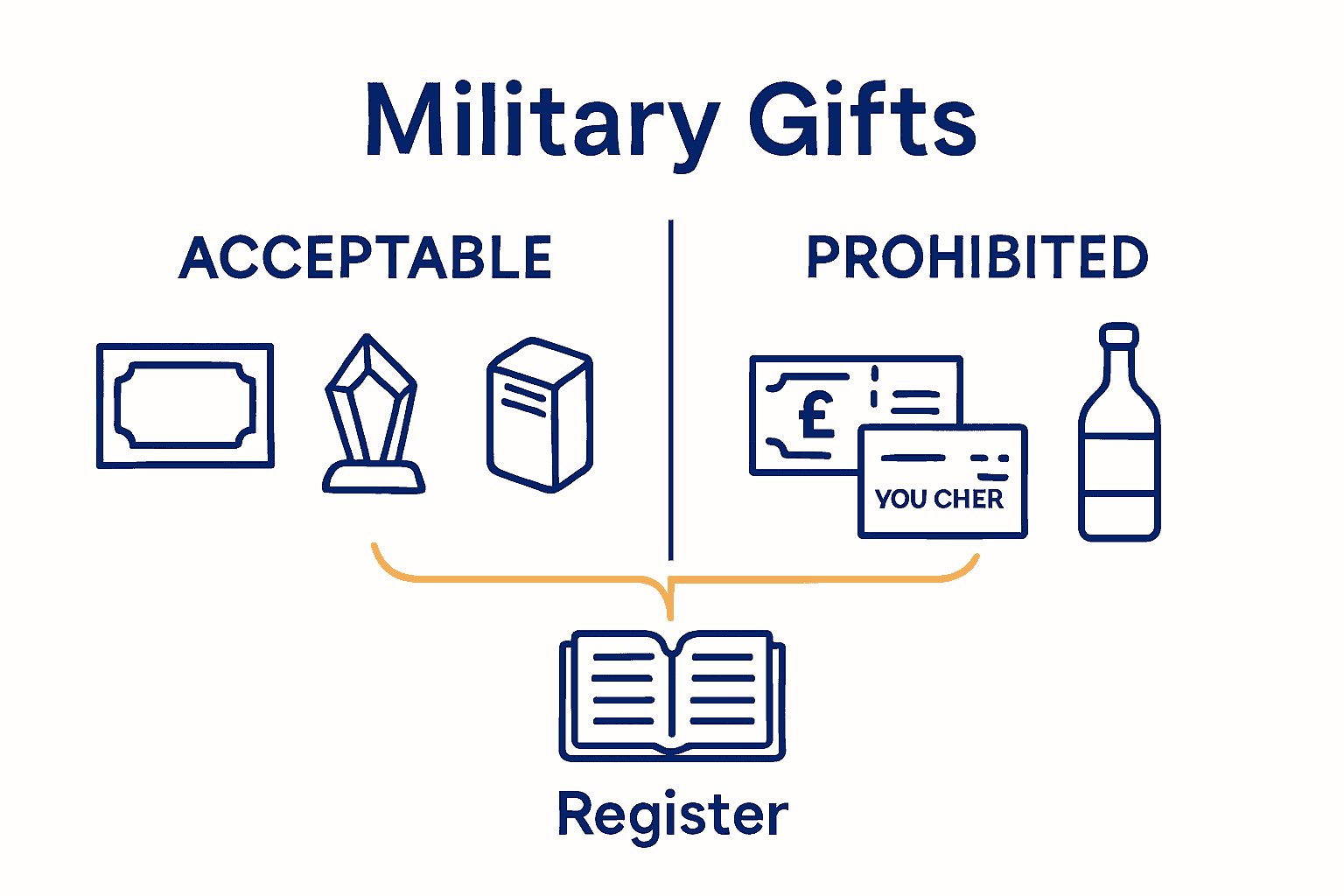
| Acceptable Gifts | Suitable gifts include commemorative plaques, crystal or silverware, historical books, and ceremonial items, while cash and consumables are prohibited. |
| Transparency Protocols | All gift exchanges must be recorded in an official Gifts and Hospitality Register to maintain accountability and prevent conflicts of interest. |
| Rank and Regimental Practices | Gift-giving customs vary by rank and regiment, requiring adherence to unique protocols that respect tradition and institutional values. |
Defining UK Military Gift Etiquette Standards
Understanding the intricate standards of military gift etiquette requires deep respect for tradition, protocol, and institutional guidelines. The United Kingdom’s military gift practices are governed by specific regulations that ensure professionalism, transparency, and appropriate conduct during gift exchanges.
According to the Ministry of Defence’s Joint Service Publication (JSP) 462, military gift standards are meticulously defined to maintain institutional integrity. These guidelines specify that official gifts should exclusively reflect an organization’s capacity, carefully distinguishing between personal and professional exchanges. Suitable gifts typically include:
- Plaques commemorating service achievements
- Crystal or silverware bearing official military crests
- Historical or regimental books
- Ceremonial items representing military heritage
Conversely, the publication explicitly prohibits certain gift types to prevent potential misconduct or perceived impropriety. UK Government Assets outlines unacceptable gifts as:
- Cash or monetary equivalents
- Gift vouchers
- Electronic equipment
- Consumable items like alcohol or tobacco
Moreover, the UK Government emphasizes that gift exchanges must adhere to strict transparency protocols. All gifts, whether accepted or declined, must be meticulously recorded in the official Gifts and Hospitality Register. This documentation ensures accountability and prevents potential conflicts of interest within military institutions.
The expenditure limits for gifts are carefully calibrated based on the recipient’s rank and position, reflecting a nuanced approach to maintaining both professional decorum and meaningful recognition. By establishing these comprehensive standards, the UK military ensures that gift-giving remains a dignified, respectful practice that honors service, tradition, and institutional values.
Types of Acceptable Military Gifts
Navigating the landscape of acceptable military gifts requires a nuanced understanding of tradition, protocol, and institutional guidelines. The United Kingdom’s military gift culture is deeply rooted in respect, recognition, and meaningful commemoration of service and achievement.
According to UK Government Assets, the Ministry of Defence’s Joint Service Publication (JSP) 462 provides comprehensive guidance on appropriate military gifts. These carefully selected items serve as lasting reminders of military service and institutional connections. The most commonly accepted categories of gifts include:
- Commemorative Plaques: Recognizing specific achievements or milestones
- Crystal and Silverware: Featuring official military crests or unit insignias
- Historical Books: Documenting regimental history or military campaigns
- Ceremonial Items: Representing military traditions and heritage
- Engraved Memorabilia: Personalised with unit emblems or service details
The UK Government emphasizes that these gifts must maintain a delicate balance of being meaningful yet modest. They should demonstrate appreciation without appearing extravagant or creating potential conflicts of interest. This approach ensures that gift-giving remains a dignified practice of institutional recognition.
Beyond physical items, acceptable military gifts often carry profound symbolic significance. They represent more than mere objects - they are tangible expressions of respect, camaraderie, and acknowledgment of service.
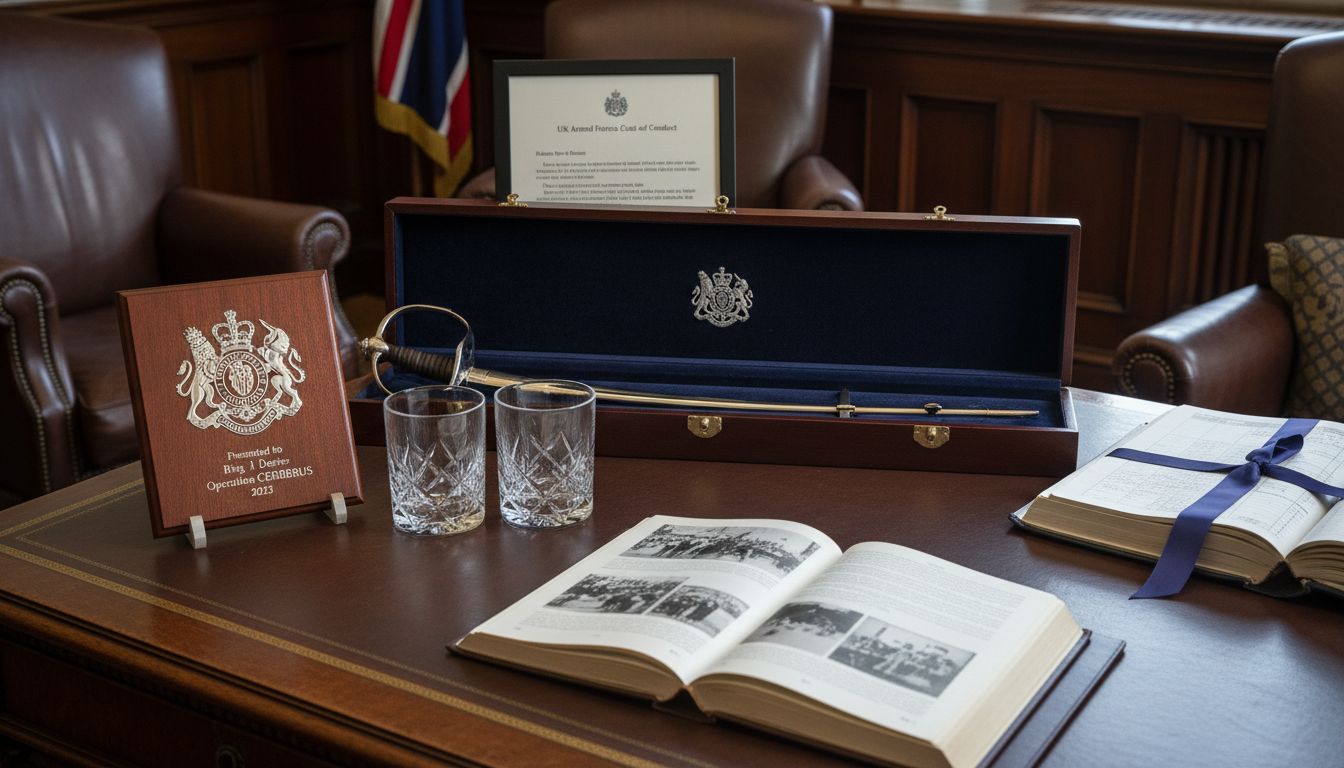 Whether marking a retirement, commemorating a significant mission, or celebrating unit achievements, these carefully selected gifts become cherished mementos that connect individuals to their broader military heritage and shared experiences.
For those seeking to understand the nuanced world of military gift-giving, our comprehensive guide on why armies exchange gifts offers deeper insights into the cultural and historical significance of these time-honoured traditions.
Protocol and Presentation Traditions
The intricate world of UK military protocol and presentation traditions represents a profound tapestry of historical reverence, institutional memory, and ceremonial excellence. These time-honoured practices are far more than mere formalities - they are living embodiments of military heritage, discipline, and collective identity.
As illuminated by Wikipedia, the Trooping the Colour ceremony exemplifies the pinnacle of military presentation traditions. Performed annually in London by regiments of the Household Division, this ceremonial event celebrates the official birthday of the British sovereign, showcasing the British Armed Forces’ precision, discipline, and historical continuity.
The Presentation of Colours stands as another cornerstone of military ceremonial protocol. Wikipedia describes this tradition as a deeply symbolic ritual marking significant events in a regiment’s history. During this ceremony, a new regimental colour is formally presented to a unit, symbolizing:
- Unbroken historical lineage
- Collective unit identity
- Commemoration of past achievements
- Transfer of institutional memory
- Reaffirmation of military values
These protocols extend beyond mere visual spectacle. They represent a sophisticated language of military communication, where every gesture, uniform detail, and ceremonial element carries profound meaning. Precise movements, meticulously maintained uniforms, and carefully orchestrated presentations communicate respect, discipline, and institutional pride.
For those intrigued by the deeper nuances of military presentation, our guide exploring the role of presentation in military traditions offers an intimate exploration of these rich, complex ceremonial practices that have shaped British military culture for generations.
Regiment and Rank-Specific Practices
The landscape of UK military gift-giving is an intricate ecosystem where regiment and rank play pivotal roles in determining appropriate protocols, traditions, and expectations. Each military unit carries its own unique cultural DNA, with nuanced practices that reflect decades of institutional history and collective identity.
Wikipedia reveals fascinating insights into how regimental traditions can diverge even in seemingly standard military practices. For instance, certain units possess special privileges regarding ceremonial protocols, such as the loyal toast - a salute to the sovereign. Some regiments enjoy exemptions from standard procedures, highlighting the deep-rooted individualism within military units.
Rank significantly influences gift-giving dynamics, with protocols becoming increasingly sophisticated as one ascends the military hierarchy. According to Wikipedia, even honorary gestures like the 21-gun salute demonstrate the nuanced approach to military recognition. The number of rounds fired varies based on:
- Specific occasion
- Rank of the recipient
- Regimental traditions
- Ceremonial context
- Historical precedent
These rank-specific practices extend beyond mere ceremonial gestures into the realm of gift exchanges. Junior and senior ranks observe different unwritten rules about presenting, receiving, and acknowledging gifts. The complexity stems from balancing institutional respect, personal achievement, and regimental pride.
For military personnel seeking to navigate these intricate cultural landscapes, our comprehensive guide to British Army gift traditions offers an insider’s perspective on mastering these subtle yet crucial interpersonal dynamics.
Legal and Ethical Considerations for Gifts
Navigating the complex terrain of military gift-giving requires a sophisticated understanding of legal and ethical boundaries. The United Kingdom’s military institutions have developed rigorous frameworks to ensure that gift exchanges remain transparent, professional, and free from potential conflicts of interest.
UK Government Assets provides comprehensive guidance through Joint Service Publication (JSP) 462, which establishes strict gift-giving protocols. The publication explicitly outlines prohibited scenarios for gift exchanges, including restrictions on presenting gifts to:
- UK citizens in official capacities
- Service personnel
- Crown servants
- British embassy and consulate staff
- UK and foreign company representatives
- NATO personnel during routine meetings
- Spouses and partners attending official functions
Moreover, the UK Government emphasizes the critical importance of transparency in gift-giving practices. Their Gifts and Hospitality Policy mandates comprehensive documentation, requiring all gifts - whether accepted or declined - to be meticulously recorded in an official Gifts and Hospitality Register. This practice ensures accountability and prevents potential perceptions of impropriety.
Ethical gift-giving in the military context transcends mere transactional exchanges. It represents a delicate balance between expressing appreciation, maintaining institutional integrity, and avoiding even the slightest suggestion of undue influence. Careful consideration of timing, context, and recipient is paramount.
For military personnel seeking deeper insights into the nuanced world of military gift protocols, our comprehensive guide to the role of gifts in the military offers an authoritative exploration of these critical considerations.
Discover the Perfect UK Military Gift with Confidence
Navigating the complex traditions and strict protocols of UK military gift etiquette can feel overwhelming. The challenge lies in finding gifts that honour service and rank while respecting the legal and ethical standards discussed in the guide. Whether you seek commemorative plaques, personalised presentation pieces, or regimental memorabilia, ensuring your gift reflects true military values and tradition is paramount.
Explore our carefully curated collection of Gifts and Personalised Presentation for Veteran and serving UK Army designed to meet these exacting standards. For those connected to the Royal Navy, our Royal Navy Shop for gifts and presentation Royal Marines & Submariners. offers unique choices that celebrate naval heritage. Start now with our Featured Gift Ideas to find meaningful, tasteful military presents. Visit The Regimental Store today and honour your military connections with gifts that truly respect tradition and protocol.
Frequently Asked Questions
What are the acceptable types of military gifts in the UK?
Suitable military gifts typically include commemorative plaques, crystal or silverware featuring military crests, historical or regimental books, ceremonial items, and engraved memorabilia that reflect military heritage.
Are there any prohibited gifts when giving to military personnel?
Yes, prohibited gifts include cash or monetary equivalents, gift vouchers, electronic equipment, and consumable items like alcohol or tobacco, to prevent any potential misconduct or perceived impropriety.
How should gifts be documented when given to military personnel?
All gifts, whether accepted or declined, must be meticulously recorded in the official Gifts and Hospitality Register to ensure transparency and accountability within military institutions.
Does rank influence the protocols for military gift-giving?
Yes, rank plays a significant role in determining the protocols for gift-giving, as expectations vary between junior and senior ranks, reflecting the importance of maintaining professional decorum and respect.
Recommended
- Complete Guide to the Role of Gifts in the Military – The Regimental Store Ltd
- British Army Gift Traditions: Complete Guide UK – The Regimental Store Ltd
- Military Gifts Eligibility: Complete Guide for the UK – The Regimental Store Ltd
- Why Do Armies Give Gifts? Complete Guide for 2025 – The Regimental Store Ltd