
Why Do Armies Give Gifts? Complete Guide for 2025
More than 300,000 gifts were distributed to British soldiers during World War I under the Princess Mary Gift Fund. Military gift-giving has always carried meaning beyond material value, shaping morale, honoring history, and strengthening bonds that unite service members. This tradition reveals how carefully chosen gifts can foster connection, preserve heritage, and communicate respect within armed forces across generations.
Table of Contents
- Purpose Behind Military Gift Giving
- Historical and Cultural Traditions in the Forces
- Types of Gifts Used in the Armed Forces
- Protocols and Etiquette for Military Presentations
- Impacts on Morale, Cohesion, and Diplomacy
- Common Mistakes and Gift Selection Risks
Key Takeaways
| Point | Details |
|---|---|
| Purpose of Military Gifts | Military gift-giving serves to enhance morale, foster unit cohesion, and recognize individual achievements within the military structure. |
| Cultural Traditions | Historical gift-giving practices reflect military values and serve as mechanisms for preserving institutional memory and celebrating accomplishments. |
| Types of Military Gifts | Gifts in the military vary widely, encompassing practical, memorial, and recognition items, each tailored to specific psychological and sociological impacts. |
| Risks in Gift Selection | Sensitive selection is essential; inappropriate gifts can lead to negative perceptions, reinforcing hierarchy or cultural insensitivity among recipients. |
Purpose Behind Military Gift Giving
Military gift-giving represents a nuanced tradition far beyond simple material exchange. At its core, these gifts serve profound psychological, cultural, and historical purposes that strengthen unit cohesion and morale. During World War I, this practice became particularly poignant, as exemplified by the Princess Mary Gift Fund of 1914, which aimed to boost troop morale through strategic Christmas gift distribution iwm.org.uk.
The purposes behind military gift-giving are multifaceted and strategically significant. These gifts often represent more than mere objects - they are powerful symbols of institutional recognition, personal appreciation, and collective memory. Military organizations use gifts to:
- Recognize individual and collective achievements
- Strengthen interpersonal bonds within units
- Commemorate significant military milestones
- Maintain historical traditions and cultural continuity
- Express institutional gratitude towards service members
Historical examples demonstrate how gifts can transcend material value. As evidenced by the Royal United Services Institute, some gifts are strategically designed to preserve military heritage and support educational initiatives. These thoughtful exchanges serve as tangible connections between past military experiences and present-day service, creating a narrative of continuous respect and remembrance.
Ultimately, military gift-giving is a sophisticated communication tool. It communicates respect, reinforces organizational values, and creates lasting emotional connections that extend far beyond the physical gift itself. Whether marking a retirement, commemorating a deployment, or honoring exceptional service, these gifts represent the military’s sophisticated approach to maintaining morale, tradition, and institutional memory.
Historical and Cultural Traditions in the Forces
Military gift-giving traditions are deeply rooted in historical practices that extend far beyond simple exchanges. These traditions reflect complex social dynamics, institutional values, and ways of maintaining cohesion within military organizations. In the British context, such practices have evolved over centuries, representing sophisticated methods of recognition and cultural preservation.
One fascinating aspect of military cultural traditions involves ceremonial practices that mirror academic institutions. For instance, the concept of a Gaudy - a traditional celebratory event involving formal gatherings and commemorations - demonstrates how gift-giving and celebration are intrinsically linked in institutional settings en.wikipedia.org. These events serve multiple purposes:
- Reinforcing institutional memory
- Honoring collective achievements
- Maintaining interpersonal connections
- Preserving historical narratives
- Transmitting organizational values
Historical examples further illuminate the strategic importance of gifts within military culture. The establishment of the Prince Consort’s Library in 1860 represents a remarkable instance of a gift designed to enhance professional development for British Army officers en.wikipedia.org. Such initiatives reveal how gifts can be powerful tools for education, professional growth, and institutional investment in human capital.
These cultural traditions are not mere nostalgic practices but living, breathing mechanisms of military identity.
Types of Gifts Used in the Armed Forces
Military gift-giving encompasses a remarkably diverse range of items, each serving unique psychological, motivational, and commemorative purposes. These gifts are far more than mere tokens - they represent intricate communication tools that reflect institutional values, recognize individual contributions, and maintain unit morale. Understanding the breadth of these gifts reveals the sophisticated strategies military organizations employ to support and motivate their personnel.
Historically, practical gifts have played a crucial role in supporting troops. During World War I, the Princess Mary Gift Fund exemplified this approach by distributing carefully curated care packages to soldiers. These boxes typically contained practical items like tobacco, cigarettes, and chocolate, designed to provide comfort and a sense of home during challenging wartime conditions iwm.org.uk. The contents of these gifts demonstrated remarkable thoughtfulness:
- Tobacco and cigarettes for momentary relaxation
- Chocolate for quick energy and morale boost
- Personal care items to maintain dignity
- Small mementos connecting soldiers to home
- Seasonal items reflecting festive considerations
Beyond immediate comfort, military gifts can represent substantial long-term investments in service members’ futures. The Sailors and Soldiers (Gifts for Land Settlement) Act 1916 represented an extraordinary example of this approach, facilitating land donations to support ex-servicemen’s post-military settlement and employment en.wikipedia.org. Modern military gift types have expanded to include:
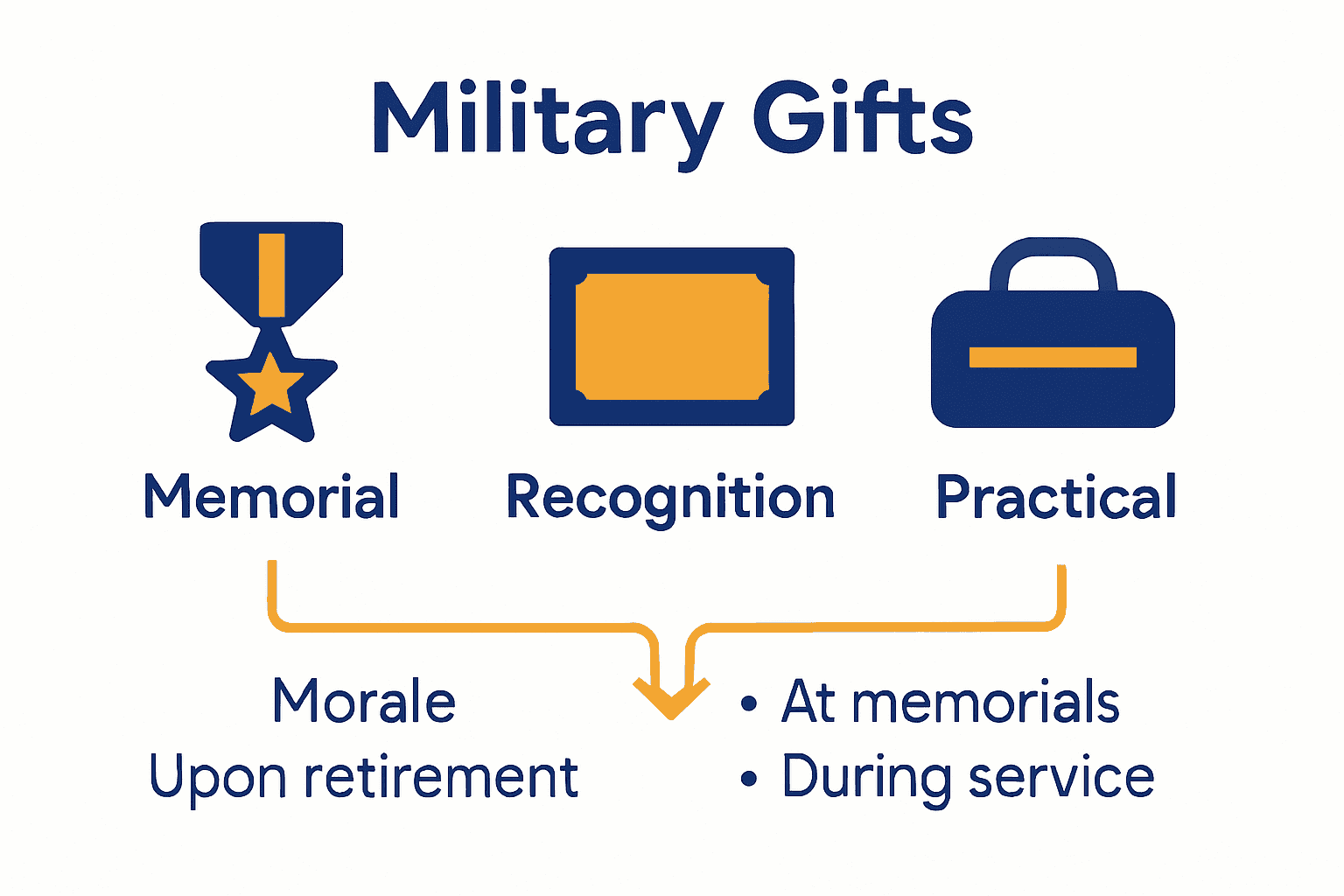
Memorial Gifts:
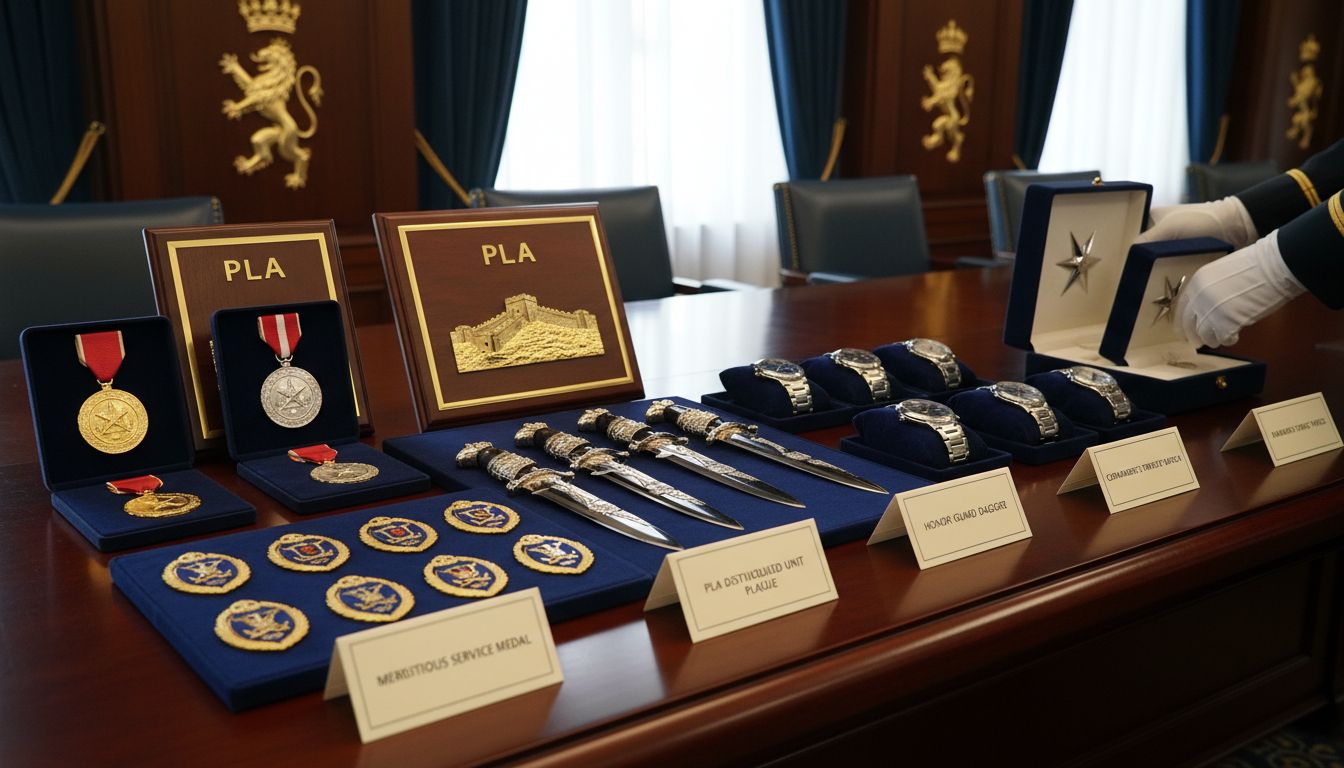
- Unit plaques and commemorative badges
- Regimental memorabilia
- Historical artifacts
Recognition Gifts:
- Service medals
- Retirement watches
- Achievement certificates
Practical Gifts:
- Specialized equipment
- Training support materials
- Personal development resources
For those interested in exploring military gift traditions more deeply, our comprehensive guide to military gifts offers invaluable insights into this rich cultural practice. These gifts represent more than material objects - they are powerful symbols of institutional respect, individual achievement, and collective memory.
Protocols and Etiquette for Military Presentations
Military presentations are intricate ceremonies steeped in tradition, precision, and profound respect. These formal events are not mere social gatherings but carefully choreographed interactions that communicate institutional values, individual achievements, and collective honor. Every gesture, every moment is meticulously planned to reflect the discipline and integrity fundamental to military culture.
The preservation of ceremonial protocols has been a longstanding priority for military institutions. The Society for Army Historical Research, established in 1921, has been instrumental in emphasizing the importance of maintaining rigorous standards for military ceremonies en.wikipedia.org. These protocols encompass a comprehensive set of expectations and practices:
- Precise order of proceedings
- Specific hierarchical acknowledgments
- Standardized presentation techniques
- Respectful body language
- Appropriate dress and appearance
Key considerations for military presentations include:
- Ranking Precedence: Higher-ranking officers typically present awards
- Uniform Standards: Impeccable dress is non-negotiable
- Formal Acknowledgment: Specific verbal and physical protocols
- Historical Continuity: Maintaining traditional ceremonial practices
Historical figures like Robert Ogilby, through the Army Museums Ogilby Trust, have underscored the critical importance of maintaining regimental traditions and appropriate presentation protocols en.wikipedia.org. These traditions are not mere formalities but living representations of military heritage, connecting past achievements with present service.
For those seeking a deeper understanding of military presentation nuances, our guide on the role of presentation in military ceremonies offers comprehensive insights. Military presentations transcend simple award-giving - they are profound moments of institutional recognition, respect, and collective memory.
Impacts on Morale, Cohesion, and Diplomacy
Military gift-giving transcends simple material exchange, serving as a sophisticated psychological and sociological instrument with profound implications for institutional effectiveness. These carefully selected gestures function as powerful communication tools that reshape interpersonal dynamics, reinforce collective identity, and bridge individual experiences within complex military structures.
During challenging periods, strategic gift distribution can dramatically influence troop morale. The Princess Mary Gift Fund during World War I represents a quintessential example of this principle. By distributing carefully curated care packages, the initiative dramatically boosted soldiers’ psychological resilience iwm.org.uk. These gifts delivered more than physical comfort - they provided:
- Emotional connection to home
- Psychological reassurance
- Tangible evidence of institutional care
- Momentary respite from wartime stress
- Sense of national solidarity
Beyond immediate troop support, military gifts can facilitate broader social objectives. The Sailors and Soldiers (Gifts for Land Settlement) Act 1916 demonstrated how strategic gift-giving could support long-term societal cohesion. By facilitating land donations for ex-servicemen, the act created pathways for successful military personnel reintegration en.wikipedia.org.
The diplomatic dimensions of military gift-giving are equally significant. These exchanges serve as nuanced communication channels that:
- Reinforce institutional relationships
- Demonstrate respect across hierarchical levels
- Commemorate shared experiences
- Create lasting interpersonal connections
- Symbolize organizational values
For readers seeking deeper insights into these intricate dynamics, our comprehensive guide to military gifts offers an extensive exploration of this fascinating tradition. Military gifts are far more than mere objects - they are carefully crafted instruments of institutional communication and social engineering.
Common Mistakes and Gift Selection Risks
Military gift-giving involves navigating complex psychological, cultural, and institutional landscapes where seemingly minor selections can have profound unintended consequences. The process demands extraordinary sensitivity, strategic thinking, and deep understanding of organizational dynamics to avoid potential pitfalls that could undermine intended positive outcomes.
Historical precedents highlight the delicate nature of military gift selection. The Princess Mary Gift Fund during World War I provides a compelling case study of the challenges in ensuring gift appropriateness and universal appeal iwm.org.uk. This initiative revealed critical considerations in gift selection:
- Cultural sensitivity
- Individual preferences
- Psychological impact
- Logistical distribution challenges
- Maintaining dignity and morale
Common mistakes in military gift selection include:
-
Inappropriate Gift Choices
- Misaligning gifts with recipient’s rank or role
- Selecting items with potential cultural insensitivity
- Overlooking individual dietary or personal restrictions
-
Symbolic Missteps
- Gifts that might suggest patronization
- Tokens that could be perceived as impersonal
- Presenting gifts that inadvertently highlight hierarchical differences
The Sailors and Soldiers (Gifts for Land Settlement) Act 1916 further demonstrates the complexities of strategic gift-giving. This legislation revealed potential risks in gift implementation, such as ensuring the suitability and practical utility of gifts for recipients en.wikipedia.org.
For readers seeking comprehensive guidance on navigating these intricate selection processes, our guide to choosing military gifts offers invaluable insights. Understanding these nuanced risks transforms gift-giving from a potential minefield into a powerful instrument of institutional communication and respect.
Honour Your Heroes with Thoughtful Military Gifts
The tradition of military gift-giving carries deep meaning, recognising service, boosting morale, and preserving history. Whether you seek to commemorate an achievement, mark a special occasion, or simply show appreciation, finding the right gift that respects these values can be challenging. Understanding the significance behind gifts like commemorative plaques, medals, or personalised presentation items is key to creating a lasting impact.
Discover a carefully curated range of UK military gifts designed specifically for serving personnel and veterans alike. Our Gifts and Personalised Presentation for Veteran and serving UK Army collection offers unique options that honour tradition while supporting personal connection. Act now to select a meaningful gift that strengthens bonds and celebrates service. Visit The Regimental Store and explore Featured Gift Ideas today to make your tribute truly memorable.
Frequently Asked Questions
Why is military gift-giving important for troop morale?
Military gift-giving plays a crucial role in boosting troop morale by providing emotional support and reinforcing connections to home. Gifts serve as symbols of institutional care and solidarity, helping soldiers cope with the challenges of military service.
What types of gifts are commonly given in the military?
Common military gifts can include practical items like care packages, recognition gifts such as service medals, and commemorative items like unit plaques. These gifts reflect individual achievements and collective experiences within military organizations.
How do military gifts help maintain traditions and cultural continuity?
Military gifts help preserve traditions and cultural continuity by commemorating significant milestones and honoring historical narratives. Through various forms of recognition, such as ceremonial gifts and symbols, these practices reinforce organizational values and create a shared sense of identity among service members.
What are the potential risks involved in selecting military gifts?
Selecting military gifts carries risks such as cultural insensitivity, inappropriate choices for the recipient’s rank or role, and overlooking individual preferences. Understanding these complexities is essential to ensure that gifts are received positively and maintain the dignity and morale of recipients.
Recommended
- Complete Guide to the Role of Gifts in the Military – The Regimental Store Ltd
- British Army Gift Traditions: Complete Guide UK – The Regimental Store Ltd
- Military Gifts: Everything You Need to Know – The Regimental Store Ltd
- Military Event Gift Planning: A Step-by-Step UK Guide – The Regimental Store Ltd