
RAF Memorabilia: Honouring Service and Heritage
Every year, thousands of british families visit museums to reconnect with the remarkable story of the Royal Air Force. These powerful relics go far beyond collectability—RAF memorabilia literally places fragments of history in the hands of modern-day collectors. With objects that range from service medals to original flight logs, these artefacts preserve living memories and invite new generations to engage with Britain’s famed military past. Understanding what defines genuine RAF memorabilia provides a meaningful window into cultural pride and shared historical identity.
Table of Contents
- Defining RAF Memorabilia And Its Cultural Significance
- Types Of RAF Memorabilia And Iconic Examples
- How RAF Memorabilia Is Valued And Collected
- Ensuring Authenticity And Avoiding Replicas
- Legal And Ethical Aspects Of RAF Memorabilia
Key Takeaways
| Point | Details |
|---|---|
| Cultural Significance | RAF memorabilia serves as a vital link between contemporary society and historical military narratives, fostering national pride and education. |
| Valuation Factors | Authenticity, historical significance, rarity, and condition are crucial criteria for valuing RAF memorabilia. |
| Ethical Collecting | Collectors must ensure items are acquired ethically, respecting provenance and avoiding items from conflict zones. |
| Preservation Practices | Proper handling, documentation, and conservation techniques are essential to maintain the integrity of RAF artefacts. |
Defining RAF Memorabilia and Its Cultural Significance
RAF memorabilia represents more than mere collectible objects - they are powerful historical artefacts that capture the extraordinary legacy of Britain’s Royal Air Force. These items range from service medals and uniforms to logbooks, aircraft components, and personal correspondence, each telling a unique narrative of courage, sacrifice, and technological innovation.
The cultural significance of RAF memorabilia extends far beyond simple preservation. The Royal Air Force Museum’s ‘Adopt an Artefact’ programme brilliantly illustrates how these historical objects connect contemporary generations with the heroic stories of past service personnel. By offering the public an opportunity to engage directly with over 50 historical artefacts, each piece becomes a tangible link to Britain’s remarkable aerial defence history.
Collecting RAF memorabilia serves multiple profound purposes. These items document technological advancements, commemorate individual and collective achievements, and provide invaluable educational resources for understanding military history. Historians, researchers, and enthusiasts value these artefacts not just as nostalgic keepsakes, but as critical windows into pivotal moments of national and international significance.
Here’s a summary of the main ways RAF memorabilia connects past and present generations:
| Connection Type | Description | Example from Article |
|---|---|---|
| Educational Value | Teaches military history and innovation | Museum exhibits, logbooks as teaching tools |
| Emotional Resonance | Inspires national pride and remembrance | Medals commemorating acts of bravery |
| Tangible Heritage Link | Links people to real historical events | Adopt an Artefact engagement |
| Research Resource | Provides material for historical study | Personal correspondence, mission logs |
Pro Tip - Preservation Wisdom: When collecting RAF memorabilia, always handle historical items with clean hands, store them away from direct sunlight, and consider professional conservation techniques to maintain their integrity and historical value.
Types of RAF Memorabilia and Iconic Examples
RAF memorabilia encompasses a remarkably diverse range of historical items that capture the essence of Britain’s aerial heritage. These collectibles span multiple categories, each offering a unique window into the Royal Air Force’s rich history and technological evolution.
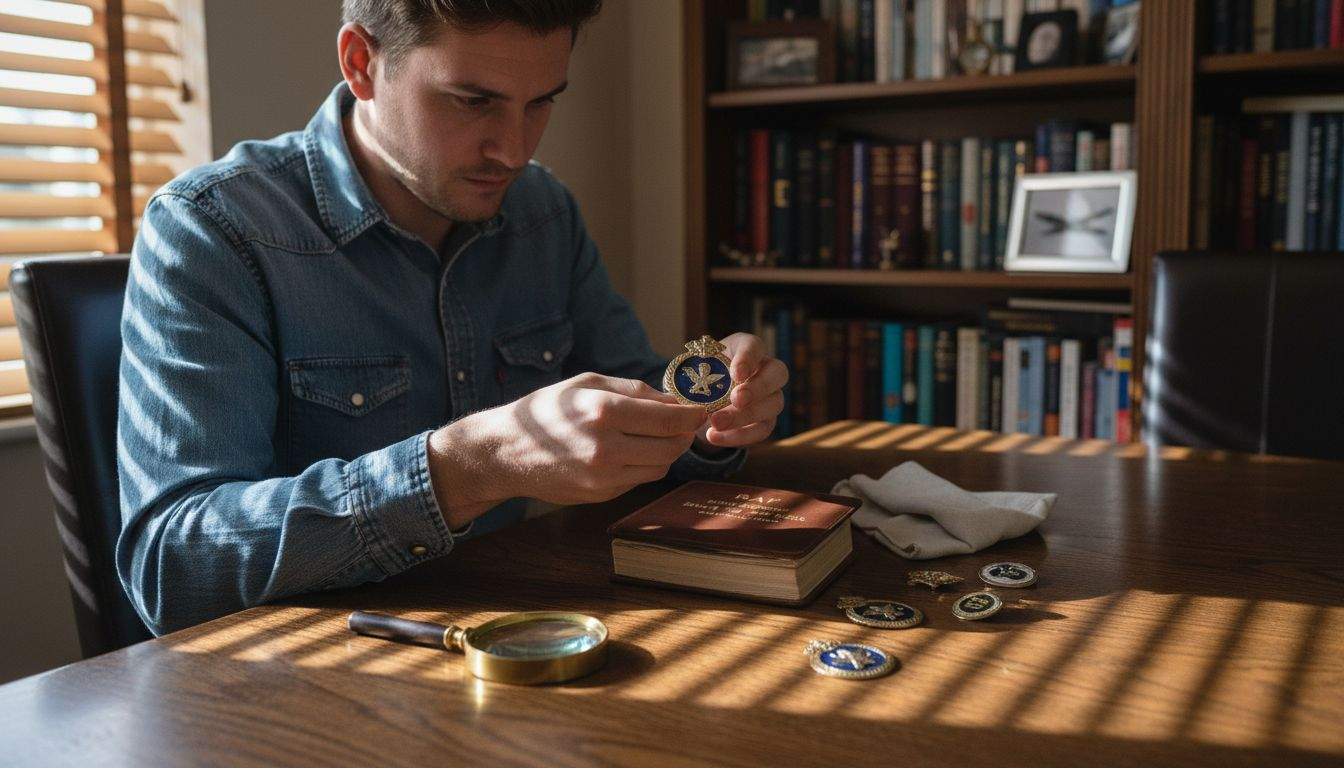
Sally Antiques highlights several iconic RAF artefacts that demonstrate the breadth of collectible items. These include distinctive pieces like chromed metal badges featuring the RAF’s winged insignia, historically significant WW2 hangar keys with original fobs, and intricate WW1 memorabilia such as laminated propeller sections transformed into quartz clocks adorned with RAF badges.
The range of RAF memorabilia is extensive, comprising personal items, military equipment, and commemorative pieces. Key categories include:
- Personal Militaria: Uniforms, medals, service books, and personal correspondence
- Technical Artefacts: Aircraft components, navigation instruments, and operational equipment
- Commemorative Items: Lapel badges, unit patches, ceremonial awards, and squadron insignia
- Photographic and Documentary Materials: Wartime photographs, mission logs, and historical documents
Pro Tip - Collector’s Insight: When acquiring RAF memorabilia, prioritise items with verifiable provenance and documentation, as authenticity significantly enhances both historical value and potential future collectibility.
How RAF Memorabilia Is Valued and Collected
Valuing RAF memorabilia is a complex process that combines historical significance, condition, rarity, and provenance. Collectors and museums alike seek items that tell compelling stories of courage, technological innovation, and national heritage, carefully assessing each piece’s unique historical context and preservation status.
The RAF Museum’s artifact donation policy demonstrates the meticulous approach to collecting, focusing specifically on material that illuminates the RAF’s story from 1980 to the present. This selective approach ensures that only items with genuine historical importance are preserved and celebrated.
The valuation of RAF memorabilia involves several critical factors:
- Authenticity: Documented proof of origin and historical connection
- Condition: Physical preservation and restoration quality
- Rarity: Unique or limited-edition items
- Historical Significance: Direct connection to important events or notable personnel
- Completeness: Intact items with original components
- Provenance: Clear documentation of the item’s history and ownership
Collectors can engage with RAF heritage through innovative programmes like the museum’s ‘Adopt an Artefact’ initiative, which allows individuals to support the preservation of historical items through various adoption tiers, bridging the gap between private collectors and institutional preservation efforts.
Pro Tip - Collector’s Strategy: Invest time in research and authentication before purchasing RAF memorabilia, as thorough documentation and expert verification can significantly enhance an item’s historical and monetary value.
Ensuring Authenticity and Avoiding Replicas
Authenticity is the cornerstone of RAF memorabilia collecting, separating genuine historical artefacts from mass-produced replicas. Collectors must develop a discerning eye and employ sophisticated techniques to distinguish between original items and convincing imitations that flood the memorabilia market.
The RAF Museum’s artifact donation guidelines underscore the critical importance of provenance, requiring comprehensive documentation that traces an item’s historical journey and verifies its genuine origins. This meticulous approach serves as a benchmark for collectors seeking to build authentic historical collections.
Key strategies for verifying RAF memorabilia authenticity include:
- Material Analysis: Examining original manufacturing techniques and period-specific materials
- Historical Documentation: Verifying items against official military records
- Expert Consultation: Engaging recognised military historians and authentication specialists
- Technological Forensics: Using advanced imaging and material testing techniques
- Detailed Comparative Research: Comparing potential acquisitions against known genuine examples
Collectors can further validate authenticity by understanding specific markers of genuine RAF artefacts, such as precise manufacturing details, accurate period markings, and consistent historical context. The RAF Museum’s ‘Adopt an Artefact’ programme offers an excellent model of how genuine historical items are preserved and authenticated, providing transparent insights into artifact verification.
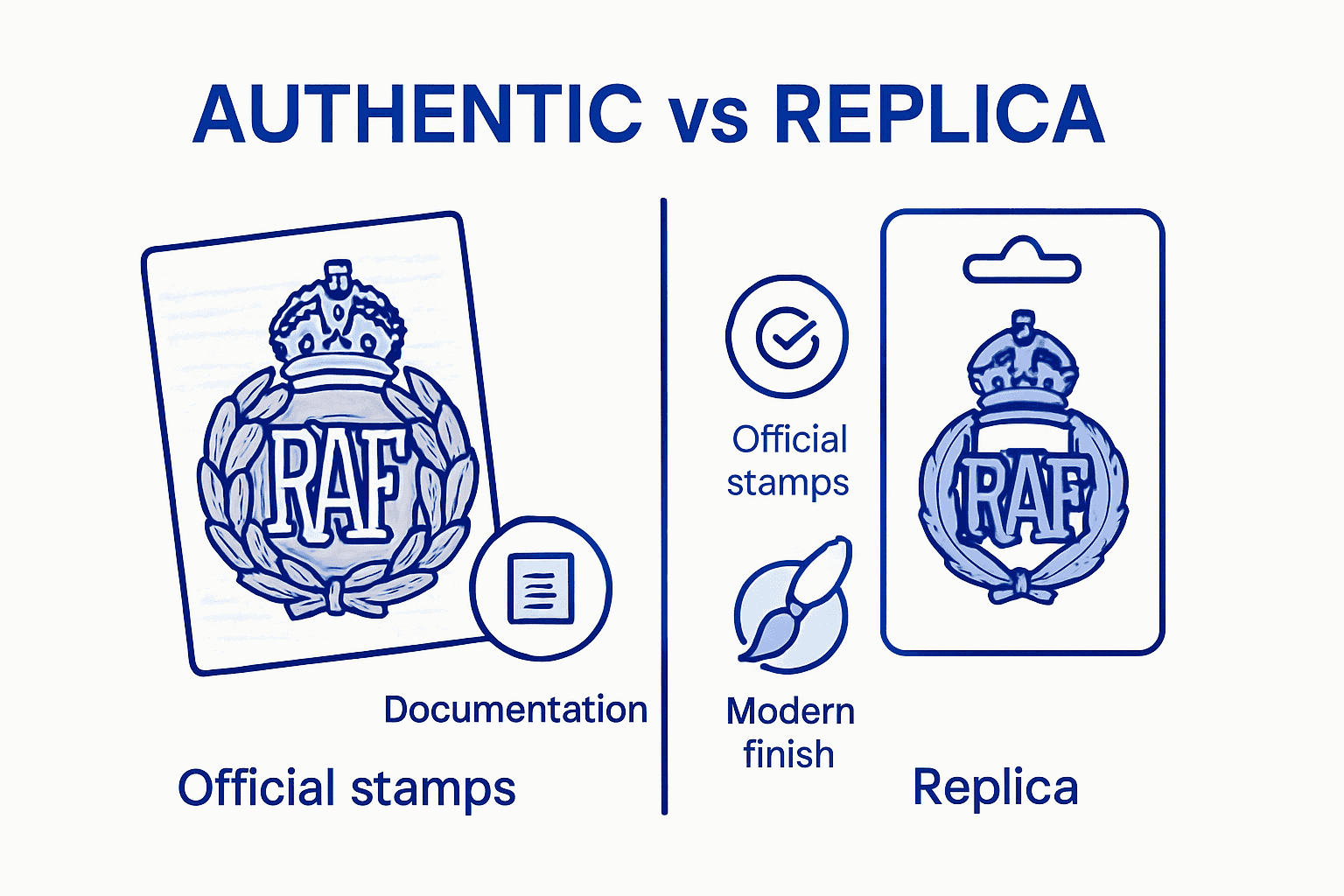
This table contrasts original RAF memorabilia with replicas to help collectors make informed choices:
| Feature | Authentic Memorabilia | Replica Item |
|---|---|---|
| Historical Provenance | Fully documented history and ownership | Lacks verifiable records |
| Material Authenticity | Period-accurate materials and methods | Modern materials, non-original techniques |
| Market Value | High due to rarity and significance | Lower, considered decorative or replica only |
| Collecting Appeal | Sought after by museums and historians | Avoided by expert collectors |
Pro Tip - Authentication Wisdom: Always request comprehensive provenance documentation and consider professional authentication before making significant investments in RAF memorabilia, as thorough verification protects both historical integrity and financial value.
Legal and Ethical Aspects of RAF Memorabilia
Collecting RAF memorabilia involves navigating a complex landscape of legal and ethical considerations that extend far beyond simple acquisition. These guidelines are designed to protect historical integrity, respect military heritage, and ensure responsible collecting practices that honour the legacy of service personnel.
The RAF Museum’s donation policy provides a comprehensive framework for understanding the ethical dimensions of military memorabilia collection. This policy emphasises crucial principles such as confirming ownership, maintaining provenance, and respecting the historical significance of artefacts.
Key legal and ethical considerations for RAF memorabilia collectors include:
- Provenance Verification: Establishing clear ownership and origin of items
- Export and Import Regulations: Complying with international cultural heritage laws
- Copyright and Reproduction Rights: Respecting intellectual property associated with military images and documents
- Ethical Acquisition: Avoiding items obtained through unethical means or from conflict zones
- Historical Sensitivity: Treating artefacts with respect and cultural understanding
- Conservation Responsibilities: Preserving items for future historical research
The legal landscape surrounding military memorabilia is intricate, with regulations varying across different jurisdictions. Collectors must be particularly cautious about items related to sensitive historical periods, ensuring that their collections do not inadvertently promote harmful ideologies or exploit historical trauma.
Pro Tip - Ethical Collecting Wisdom: Always research the complete history of an item, consult expert historians, and prioritise collections that contribute positively to historical understanding and remembrance.
Honour RAF Heritage with Authentic Gifts and Collectibles
Preserving the legacy of the Royal Air Force is a deeply personal journey that connects us to acts of bravery, innovation, and sacrifice. If you are passionate about RAF memorabilia and want to celebrate this proud heritage, explore our specially curated collection at the Royal Air Force Shop for gifts and presentation products with RAF. Our selection honours authentic RAF symbols and offers meaningful ways to remember and share these stories.
Discover unique RAF gifts that embody historical significance and respect for service personnel. Act now to find commemorative medals, insignia, and keepsakes that complement your collection or make thoughtful presents for veterans and enthusiasts alike. Visit The Regimental Store today to celebrate heritage with authenticity and pride. For other military interests, explore our wider range of memorabilia or browse exclusive offers via our CLEARANCE section.
Frequently Asked Questions
What types of items are considered RAF memorabilia?
RAF memorabilia includes a wide range of historical items such as personal militaria (uniforms, medals, service books), technical artefacts (aircraft components, navigation instruments), commemorative items (lapel badges, squadron insignia), and photographic/documentary materials (wartime photographs, mission logs).
How can I ensure the authenticity of RAF memorabilia?
To ensure authenticity, verify the item’s provenance through documentation, analyses of materials, historical records, consulting experts, and using comparative research against known genuine examples. Always request provenance information when acquiring items.
What factors influence the value of RAF memorabilia?
The valuation of RAF memorabilia is influenced by several factors including authenticity, condition, rarity, historical significance, completeness, and provenance. Items with documented history and unique backgrounds tend to hold higher value.
Why is preserving RAF memorabilia important?
Preserving RAF memorabilia is vital for maintaining links to history. These artefacts not only honour the sacrifices made by service personnel but also provide educational insights into military history, technological advancements, and national heritage.
Recommended
- RAF Presentation Gifts - Royal Air Force Memorabilia storage box – The Regimental Store Ltd
- Complete Guide to the Meaning of Veteran Memorabilia – The Regimental Store Ltd
- Why Collect Military Memorabilia: Purpose, Pride & Preservation – The Regimental Store Ltd
- Complete Guide to Military Memorabilia in the UK – The Regimental Store Ltd
- 7 clevere Tipps für Sammelalben für Schwimmabzeichen