
Complete Guide to Military Memorabilia in the UK
Over two million people in the UK collect military memorabilia, reflecting a growing interest in personal and national history. Every medal, badge, or letter offers a direct link to the stories of courage and sacrifice that shape our past. Whether you are a passionate collector or just curious, understanding the origins and importance of these items reveals much about the values and memories we choose to preserve.
Table of Contents
- Defining Military Memorabilia And Its Significance
- Major Types Of Military Memorabilia Items
- Collecting And Displaying Military Memorabilia
- Legal Considerations And Authenticity In The UK
- Preserving, Valuing, And Selling Memorabilia
Key Takeaways
| Point | Details |
|---|---|
| Military Memorabilia Represents History | These artifacts serve to commemorate the sacrifices and heroism of military service, preserving personal and national stories. |
| Types of Memorabilia Vary | Common items include medals, uniforms, letters, and military equipment, each holding unique historical significance. |
| Authenticity is Crucial | Collectors must verify provenance and understand legal restrictions to ensure respect for military history. |
| Proper Preservation is Essential | Techniques such as controlling humidity and using acid-free materials are vital for maintaining the integrity of military memorabilia. |
Defining Military Memorabilia and Its Significance
Military memorabilia represents far more than mere collectible objects - these are powerful historical artefacts that preserve the stories, sacrifices, and heroism of those who have served in the armed forces. According to Etsy, militaria encompasses “objects associated with military history or warfare, often collected for their historical significance”.
These remarkable items can range widely in type and historical importance, but they all share a common purpose of commemorating military service. Military memorabilia might include:
- Medals and decorations
- Uniforms and patches
- Personal letters and photographs
- Military equipment and weaponry
- Flags and regimental standards
As Oaths of Allegiance explains, these artifacts are “crafted to honor military heritage and create lasting memories for veterans, serving personnel, and their families”. They serve as tangible connections to personal and national military histories, helping preserve the stories of courage and sacrifice that might otherwise be forgotten.
Collecting military memorabilia is not just about preserving objects - it’s about maintaining a living connection to our military heritage. Each item tells a unique story, representing the individual experiences of those who have served and the collective narrative of military service. Whether displayed in a private collection, a regimental museum, or passed down through generations, these items continue to educate, inspire, and pay tribute to the brave men and women who have defended our nation.
Major Types of Military Memorabilia Items
Military memorabilia encompasses a fascinating array of historical artifacts that capture the essence of military service and heritage. According to Collexchange, militaria items can be categorized into several distinct types that appeal to collectors and historians alike.
Badges and Insignia form a significant portion of military collectibles, representing unit affiliations, ranks, and achievements. Etsy highlights that popular militaria items include:
- Uniforms and clothing
- Medals and decorations
- Helmets and headgear
- Utility belts and equipment
- Historical documents and artifacts
- Vintage masks and protective gear
- Edged weapons and firearms
The range of military memorabilia is incredibly diverse, extending beyond simple collector’s items to tangible pieces of military history.
Here’s a comparison of major types of military memorabilia and their historical significance:
| Type of Memorabilia | Typical Examples | Historical Significance |
|---|---|---|
| Medals & Decorations | Campaign medals Bravery awards |
Honours service Recognises heroism |
| Uniforms & Badges | Tunics Unit insignia |
Shows rank and affiliation Reflects period styles |
| Personal Letters & Photographs | Soldier correspondence Vintage images |
Offers personal perspective Documents lived experience |
| Equipment & Weaponry | Helmets Swords Firearms |
Illustrates military technology Demonstrates field usage |
| Flags & Regimental Standards | Colours Banners |
Symbolises unit pride Marks pivotal events |
Beyond their collectible value, these items serve as important historical documents. Each piece tells a story - from a soldier’s personal journey to broader military campaigns. Whether displayed in private collections, regimental museums, or passed down through generations, military memorabilia continues to preserve and honor the rich heritage of military service.
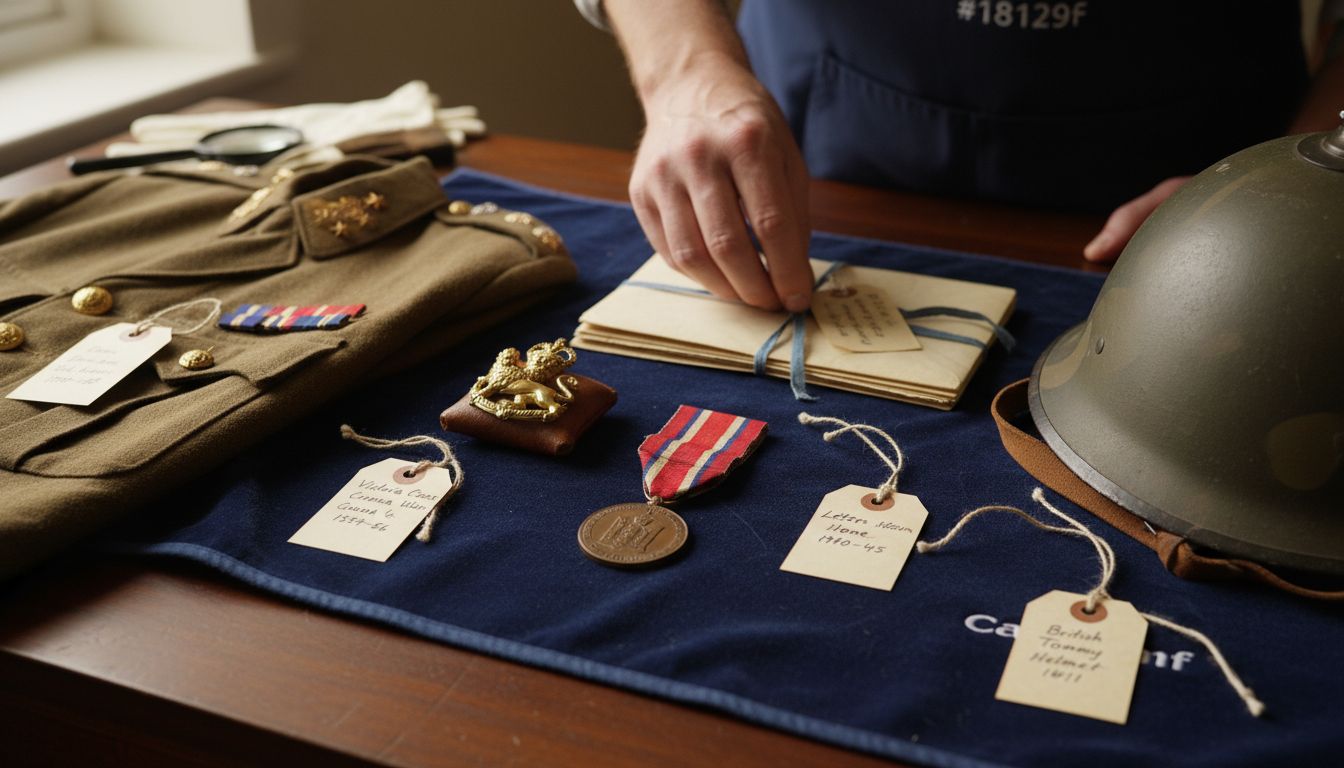
Collecting and Displaying Military Memorabilia
Collecting military memorabilia is an art form that requires passion, knowledge, and careful preservation. Militia Collectors UK exemplifies this approach, focusing on preserving historical artifacts from conflicts like World War I, World War II, and the Falklands War, with a mission to maintain the stories of those who served.
For serious collectors, authenticity is paramount. Key considerations when collecting include:
- Verifying item provenance
- Understanding historical context
- Assessing condition and preservation state
- Researching specific historical periods
- Establishing connections with reputable dealers
Pastimes A.H. Stevens demonstrates the depth of military memorabilia collecting, specializing in items like medals, badges, insignia, swords, and bayonets primarily from the World Wars. Successful collectors develop a keen eye for detail and a deep respect for the historical significance of each piece.
Displaying military memorabilia requires careful thought to protect and honor these precious artifacts.
Recommended display methods include using archival-quality display cases, avoiding direct sunlight, maintaining consistent temperature and humidity, and creating narrative displays that tell the stories behind individual pieces. Whether in a private collection or a regimental museum, each item serves as a powerful testament to military service and historical remembrance.
Legal Considerations and Authenticity in the UK
Navigating the legal landscape of military memorabilia requires careful understanding of specific regulations and ethical guidelines. Protection of Military Remains Act 1986 provides a critical framework, making it an offense to interfere with protected military sites and ensuring respectful treatment of military artifacts.
Authenticity in military memorabilia collection involves several critical considerations:
- Verifying historical documentation
- Confirming item provenance
- Understanding legal restrictions on certain artifacts
- Checking for potential export/import regulations
- Consulting expert authentication services
Bodmin Keep highlights the nuanced ethical dimensions of military memorabilia, emphasizing the importance of displaying items without glorifying conflict. Collectors must balance historical preservation with respectful representation, ensuring that each artifact tells a meaningful story without sensationalizing war.
Moreover, UK collectors must be aware of specific legal constraints. Some military items, particularly those related to sensitive conflicts or containing potentially restricted materials, may require special permissions or documentation. Reputable collectors prioritize transparency, documentation, and adherence to legal guidelines, transforming their collections from mere possessions into important historical narratives that honour military service and sacrifice.
Preserving, Valuing, and Selling Memorabilia
Military memorabilia preservation requires a delicate balance of historical respect and careful conservation techniques. Oaths of Allegiance exemplifies this approach by creating handmade, MOD-approved keepsakes that honor military service while maintaining authentic historical integrity.
Preservation techniques for military artifacts involve several critical steps:
- Controlling humidity and temperature
- Using acid-free storage materials
- Avoiding direct sunlight exposure
- Handling items with clean, white cotton gloves
- Periodic professional conservation assessment

Collexchange provides insight into the valuation process, categorizing militaria into specific types that help collectors understand an item’s potential market worth. Factors influencing value include:
- Historical significance
- Condition of the artifact
- Rarity of the item
- Provenance and documentation
- Historical period represented
Selling military memorabilia requires a nuanced understanding of both emotional and financial value. Reputable collectors and dealers approach transactions with deep respect for the historical narrative each piece represents. Professional appraisers, specialist auction houses, and dedicated military memorabilia platforms can help ensure fair valuation and responsible transfer of these precious historical artifacts.
Honour Military Heritage with Thoughtful Gifts and Keepsakes
Preserving military memorabilia is about more than collecting objects - it is a heartfelt tribute to courage, sacrifice, and history. If you have been moved by stories of medals, badges, or regimental flags from the article, you will appreciate the importance of quality, authentic items that celebrate service. At The Regimental Store Ltd, we understand the powerful connection these keepsakes create for veterans, serving personnel and their families.
Explore our carefully crafted selection starting with the Royal Navy Shop for gifts and presentation Royal Marines & Submariners or discover personalised treasures in the Royal Artillery Shop for Gifts and personalised presentation awards. Find unique ideas on our Featured Gift Ideas page and bring home a meaningful symbol of respect. Act now to secure your keepsake and honour the legacy of military service with genuine pride.
Frequently Asked Questions
What types of items are considered military memorabilia?
Military memorabilia includes a range of artifacts such as medals, uniforms, personal letters, military equipment, photographs, and flags. Each item commemorates the service and sacrifices made by military personnel.
How can I ensure the authenticity of military memorabilia?
To verify the authenticity of military memorabilia, check for historical documentation, confirm the item’s provenance, and utilize expert authentication services. Understanding the legal restrictions on certain artifacts also helps ensure authenticity.
What are effective ways to display military memorabilia?
Effective display methods for military memorabilia include using archival-quality display cases, avoiding direct sunlight, maintaining stable temperature and humidity, and creating narrative displays that tell the stories behind individual pieces.
What preservation techniques should I use for military memorabilia?
To preserve military memorabilia, control humidity and temperature, use acid-free storage materials, avoid direct sunlight exposure, handle items with clean, white cotton gloves, and periodically assess items with professional conservation techniques.
Recommended
- Royal Marines Gift Shop Personalised Veterans Memorabilia Box – The Regimental Store Ltd
- Royal Navy Presentation Gifts - White Ensign & HM Ships Memorabilia Storage Box – The Regimental Store Ltd
- Personal Medal or Memorabilia Oak Storage Box. – The Regimental Store Ltd
- Army Parade or Memorabilia Box – The Regimental Store Ltd