
Types of Military Regalia in the UK Forces
Uniforms and badges worn by British military personnel tell stories that words often cannot. For servicemen and women in the United Kingdom, every stitch and insignia reflects rank, achievement, and deep-rooted tradition. Over 300 years of regimental history shape how military regalia is designed and understood today. Explore how these visual symbols embody collective pride, individual accomplishment, and the ongoing narrative of British military service.
Table of Contents
- Defining Military Regalia And Its Importance
- Distinctive Regalia Across Army, Navy And Raf
- Ceremonial Items And Their Symbolism
- Badges, Insignia And Presentation Protocols
- Legal Framework And Wearing Traditions
- Common Pitfalls And Preservation Advice
Key Takeaways
| Point | Details |
|---|---|
| Significance of Military Regalia | Military regalia serves as a complex visual language, conveying rank, achievements, and regimental identity within the armed forces. |
| Distinctive Elements by Branch | Each branch of the UK armed forces has unique regalia that reflects their specific traditions, roles, and histories. |
| Ceremonial Importance | Ceremonial items, such as regimental colours, embody the collective memory and pride of military service, highlighting historical narratives. |
| Preservation Practices | Proper preservation of military regalia is crucial, requiring careful attention to environmental conditions and handling to prevent damage. |
Defining Military Regalia and Its Importance
Military regalia represents far more than mere clothing or decorative items for British military personnel. These distinctive uniforms, badges, and insignia form a complex visual language that communicates organisational identity, historical lineage, and individual achievements within the United Kingdom’s armed forces. The regimental system, with roots tracing back to the 17th century, fundamentally underpins how these symbolic elements function within military culture.
At its core, military regalia serves multiple critical purposes beyond aesthetic representation. Each element - from regimental ties to specific badge placements - carries deep significance. Uniforms communicate rank, specialisation, and unit membership, while insignia represent hard-earned qualifications, operational deployments, and personal military achievements. These visual markers create an immediate, non-verbal understanding of a service member’s background and experience within the military hierarchy.
The importance of military regalia extends well beyond individual representation. These ceremonial and functional garments and accessories embody collective memory, regimental pride, and the continuous thread connecting contemporary service members with generations of military tradition. By wearing specific items, soldiers, sailors, and airmen symbolically connect themselves to a rich narrative of sacrifice, courage, and national service that predates their own individual contributions.
Pro tip: When exploring military regalia, pay close attention to the subtle details of badges and insignia, as each element tells a unique story of service and individual achievement.
Distinctive Regalia Across Army, Navy and RAF
Each branch of the United Kingdom’s armed forces possesses a unique visual identity expressed through its distinctive military regalia. These regimental insignia and uniforms communicate complex narratives of service, specialisation, and historical tradition, representing far more than mere clothing or decorative elements.
The British Army’s regalia typically features intricate regimental badges representing specific units, with insignia often displaying unit numbers, county affiliations, and battle honors. Historically significant elements like cap badges, shoulder titles, and distinctive coloured hackettes provide immediate visual recognition of a soldier’s specific regiment and operational background. Regimental ties and distinctive uniform cuts further emphasise the unique identity of individual military units.
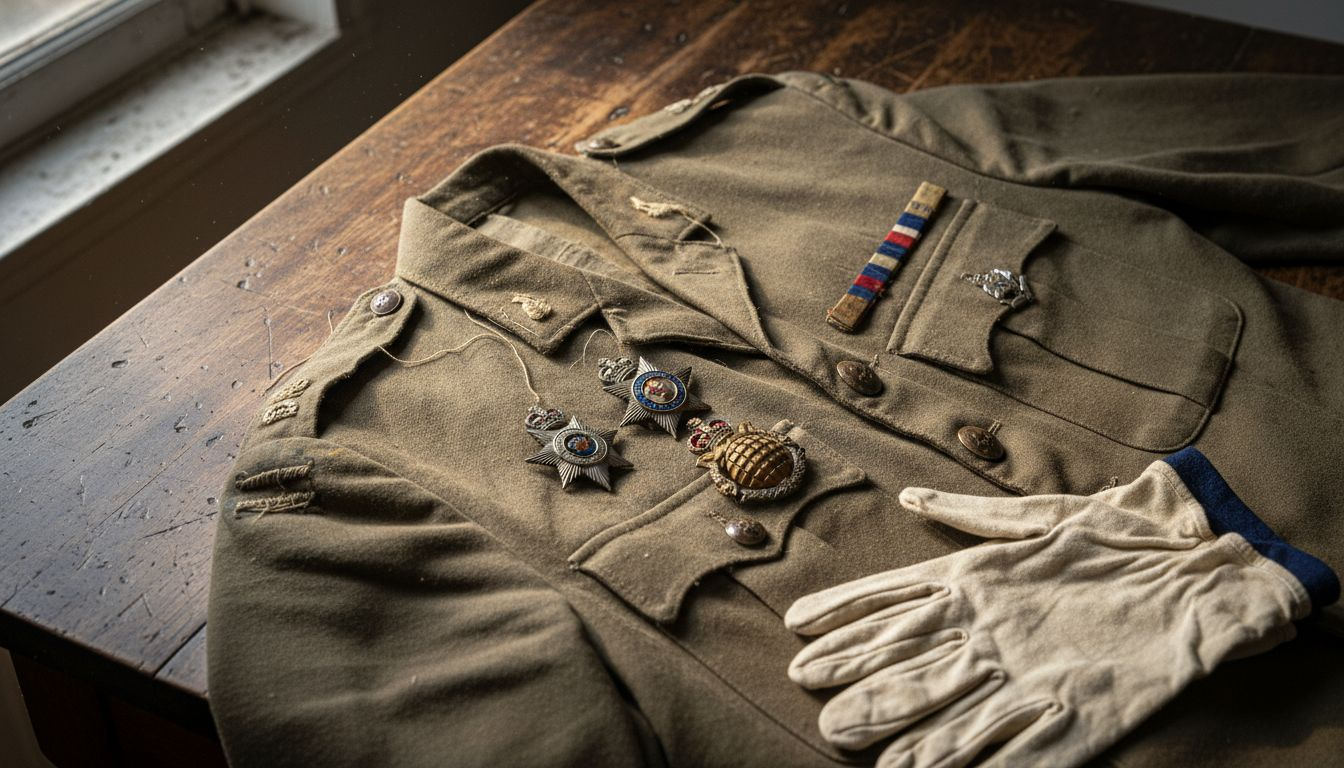
The Royal Air Force presents perhaps the most distinctive visual markers, with pilot wings that have evolved from the original swift’s wing design of 1913. Their insignia, including shoulder eagles and specialised pilot badges, communicate not just rank but also specific operational roles and qualifications. The shoulder badge, often featuring an eagle with an RAF monogram and crown, represents a proud lineage of British military aviation.
The Royal Navy’s regalia equally reflects its maritime heritage, with naval uniforms and badges showcasing intricate designs that indicate rank, specialisation, and ship affiliations. Sailors’ and officers’ uniforms incorporate specific color schemes, badge placements, and insignia that tell a complex story of maritime service and naval traditions.
Pro tip: When examining military regalia, look beyond the surface - each badge, patch, and uniform element carries a rich narrative of individual and collective military service.
Here is a comparison of regalia elements across the three main service branches:
| Regalia Element | British Army | Royal Navy | Royal Air Force |
|---|---|---|---|
| Key Badge Feature | Cap badge with regimental insignia | Anchor motifs with ship affiliations | Wings badge with eagle and crown |
| Dress Uniform Colour | Scarlet tunic or khaki | Dark navy blue or white | Air Force blue |
| Typical Insignia | Shoulder titles, hackette colours | Sleeve stripes, ship-specific patches | Shoulder eagles, pilot wings |
| Symbolic Focus | Historical county and battle honours | Maritime tradition and rank hierarchy | Aviation legacy and specialisation |
Ceremonial Items and Their Symbolism
Military ceremonial items represent a profound visual language of honour, tradition, and national heritage within the United Kingdom’s armed forces. Ceremonial uniforms and regalia are painstakingly crafted to embody the complex relationship between military service and the Crown, transcending mere clothing to become powerful symbols of institutional memory and collective identity.
The most iconic of these ceremonial elements are regimental colours and standards - intricate fabric banners that encapsulate a unit’s entire historical narrative. Each colour bears battle honours, representing the sacrifices and achievements of generations of servicemen and women. During prestigious events like Trooping the Colour, these standards are paraded with meticulous precision, demonstrating the deep respect for military tradition and the unbroken lineage of service.
Dress uniforms play a particularly significant role in ceremonial contexts, with each branch of the military developing distinctive formal attire that communicates rank, specialisation, and regimental affiliation. The Royal Navy’s dress whites, the British Army’s scarlet tunics, and the Royal Air Force’s immaculate blues are not merely costumes but living representations of institutional pride and historical continuity. These uniforms are carefully maintained, with every button, badge, and seam reflecting generations of military protocol and excellence.
Ceremonial events like state occasions and military parades showcase these symbolic items, transforming military regalia into a powerful national narrative. From the precise placement of medals to the immaculate polishing of brass insignia, every detail communicates a story of discipline, honour, and unwavering commitment to service.
Pro tip: When observing military ceremonial items, look beyond the visual spectacle and appreciate the rich historical narrative woven into every stitch and symbol.
Badges, Insignia and Presentation Protocols
Military badges and insignia represent a sophisticated system of communication within the United Kingdom’s armed forces, serving as visual markers of service, achievement, and institutional identity. Badges are strictly regulated in design and use, representing key symbols such as royal affiliations, regional connections, and battle honours, each element carefully crafted to tell a specific narrative of military service.
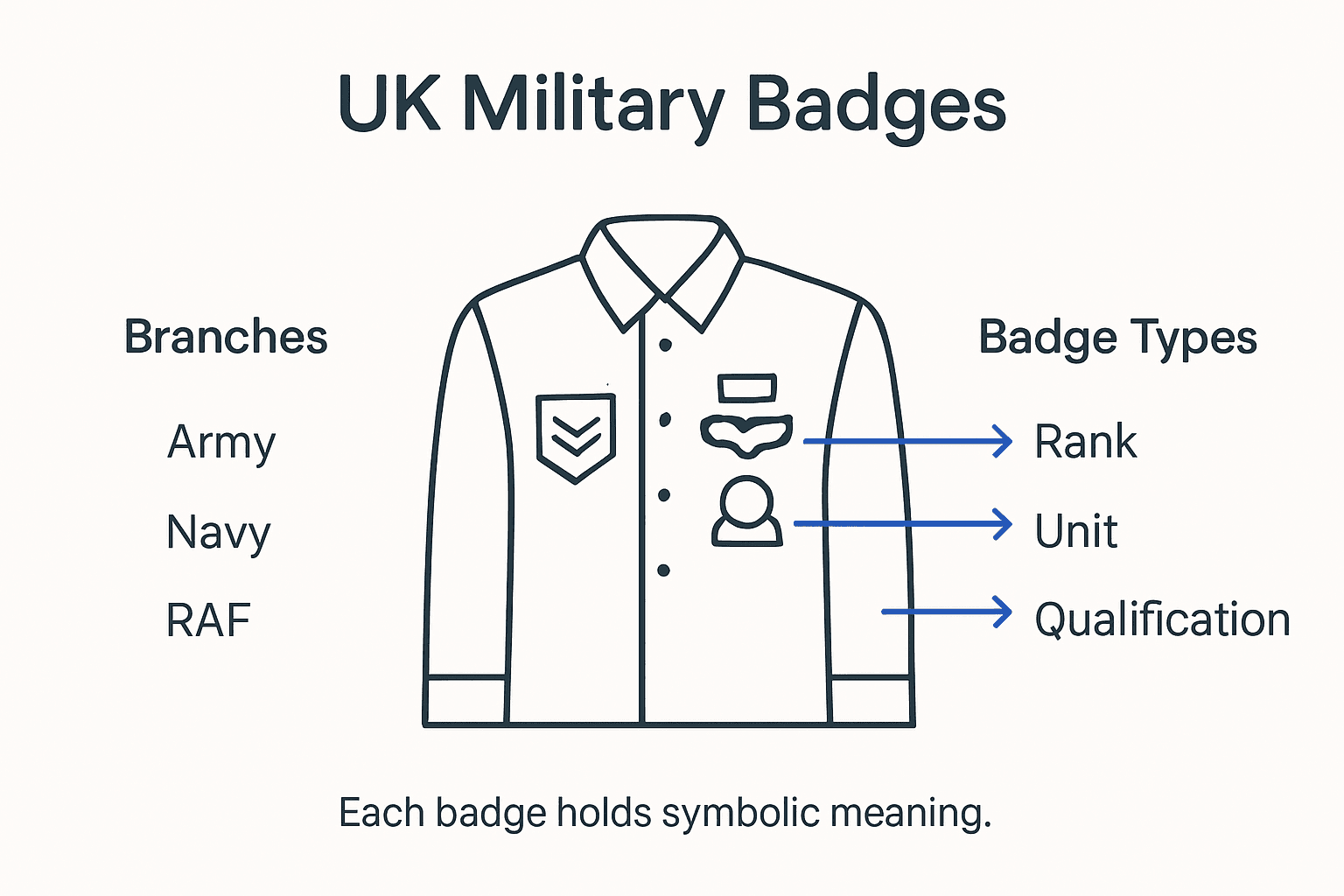
Rank insignia form a critical component of this visual language, with precise placement and design communicating an individual’s status and authority within military hierarchies. Officers typically display their insignia on shoulders or chest, while other ranks wear theirs on sleeves, guiding official protocols such as saluting and ceremonial drill. These markings differ subtly across the Army, Navy, and Royal Air Force, reflecting the unique traditions of each service branch.
The complexity of military badge presentation extends beyond mere decoration. Regimental badges often incorporate intricate heraldic elements, including regional symbols, historical references, and commemorative motifs. A single badge can communicate a regiment’s geographical origin, significant battles, royal connections, and specialised military roles. These are not simply decorative items but living historical documents that connect contemporary service members with their unit’s proud lineage.
Presentation protocols govern every aspect of badge and insignia display, from the precise angle of a medal to the exact positioning of regimental patches. These protocols ensure that military regalia maintains its profound symbolic significance, representing not just individual achievement but the collective honour of the United Kingdom’s armed forces.
Pro tip: When examining military badges, look for the subtle details that tell a deeper story of service, sacrifice, and institutional pride.
Legal Framework and Wearing Traditions
Military regalia in the United Kingdom operates under a complex legal framework that balances historical tradition with contemporary administrative protocols. The Central Chancery of the Orders of Knighthood provides specific guidelines governing the precise rules for wearing military orders, decorations, and medals, establishing a comprehensive system that dictates not just appearance, but the deeper symbolic significance of military dress.
Wearing regulations extend far beyond simple aesthetic considerations, encompassing a nuanced set of legal and cultural expectations. The Armed Forces Covenant legally enshrines fundamental principles of fair treatment, directly influencing uniform protocols and ceremonial practices. These regulations specify acceptable contexts for wearing specific items, the correct positioning of medals, and the hierarchical significance of different insignia.
The legal framework surrounding military regalia is not merely a set of rigid rules, but a living document that reflects the evolving nature of military service. Specific protocols govern everything from the exact angle of a medal to the precise placement of regimental patches, ensuring that each piece of regalia maintains its profound symbolic integrity. These guidelines respect both individual achievements and the collective honour of military service, creating a visual language that communicates respect, tradition, and institutional pride.
Understanding these wearing traditions requires more than technical knowledge - it demands an appreciation for the deep cultural and historical significance embedded in every stitch and badge. Each regulation represents a carefully maintained connection between past and present, honouring the continuous legacy of military service in the United Kingdom.
Pro tip: Always consult official guidelines when wearing military regalia, as each detail carries significant historical and personal meaning.
Common Pitfalls and Preservation Advice
Researching and preserving military regalia requires meticulous attention to detail and expert knowledge, as these historical artifacts are incredibly fragile and susceptible to damage. Military collectors and historians must navigate complex challenges, including potential misattribution of items and the risk of irreversible deterioration without proper conservation techniques.
Preservation of military regalia demands a sophisticated understanding of environmental conditions and handling protocols. Textile preservation involves controlling humidity, temperature, and light exposure to prevent fabric degradation. Medals, badges, and uniforms require different conservation strategies - metals can oxidise, fabrics can fade, and delicate embroidery can unravel if not stored with specialist archival techniques. Historic preservation experts recommend specific storage materials and climate-controlled environments to maintain the integrity of military artifacts, ensuring these precious historical items remain intact for future generations.
Common pitfalls in military regalia preservation include improper storage, exposure to direct sunlight, fluctuating humidity levels, and inappropriate cleaning methods. Collectors often underestimate the complexity of maintaining these items, risking permanent damage through well-intentioned but misguided restoration attempts. Professional conservators recommend using acid-free tissue paper, avoiding plastic storage containers, and maintaining consistent environmental conditions to prevent material breakdown.
The table below outlines common preservation challenges and expert solutions for military regalia:
| Preservation Challenge | Potential Damage | Expert Solution |
|---|---|---|
| Exposure to sunlight | Fading of fabric and embroidery | Store in low-light, climate control |
| High humidity fluctuations | Mould and fabric degradation | Maintain stable, low humidity |
| Improper cleaning methods | Medal tarnish, fabric weakening | Use specialist textile conservators |
| Plastic storage containers | Chemical leaching onto artefacts | Use acid-free tissue and boxes |
Documentation plays a crucial role in preserving military regalia’s historical significance. Detailed records of provenance, condition reports, and historical context are as important as physical conservation. Consulting regimental museums, military archives, and specialist conservation experts can provide invaluable guidance in maintaining these important historical artifacts.
Pro tip: Always consult professional conservators before attempting any restoration or cleaning of military regalia, as amateur interventions can cause irreversible damage.
Celebrate British Military Heritage with Authentic Regalia Gifts
Understanding the rich symbolism and precise traditions of military regalia can be challenging, especially when seeking meaningful ways to honour service and dedication. This article highlights the importance of badges, ceremonial uniforms, and historic insignia in conveying personal and collective stories within the British Armed Forces. If you are looking to express respect or commemorate distinguished service for yourself or a loved one, choosing the right personalised presentation items matters deeply.
Explore Gifts and Personalised Presentation for Veteran and serving UK Army to find high-quality, authentic UK Military gifts that truly reflect the pride and heritage detailed in this guide.
Discover our exclusive range crafted with attention to detail that honours the legacy of British Infantry Regiments and MOD Guards. Act now to secure the perfect symbol of commitment and tradition at The Regimental Store Ltd. Each item is designed to uphold the dignity and honour embodied by every badge and uniform discussed here. Start your journey today by visiting British Infantry Regiments Gifts and Personalised Presentations and find that special piece that tells your story.
Frequently Asked Questions
What are the main types of military regalia in the UK forces?
The main types of military regalia in the UK forces include uniforms, badges, insignia, ceremonial items, and regimental colours. Each type serves distinct purposes and carries significant historical and symbolic meaning.
How does military regalia represent individual service members?
Military regalia communicates an individual service member’s rank, specialisation, and unit membership through specific elements like uniforms and insignia, which visually convey their achievements and background in the military hierarchy.
What is the significance of ceremonial items in military regalia?
Ceremonial items like regimental colours and dress uniforms play a critical role in representing military traditions and honouring collective memories. They are displayed during significant events to demonstrate respect for military heritage and the legacy of service.
How are badges and insignia regulated in the UK forces?
Badges and insignia are regulated regarding design, placement, and use, with specific protocols governing their display. These regulations ensure that military regalia maintains its symbolic significance and reflects both individual achievements and the collective honour of the military.
Recommended
- Why Display Military Badges: Honouring Service in the UK – The Regimental Store Ltd
- What Is a Regimental Tie? Complete UK Overview – The Regimental Store Ltd
- Military Cufflinks: Symbolism and Style for Veterans – The Regimental Store Ltd
- Military Gifts Eligibility: Complete Guide for the UK – The Regimental Store Ltd
- Complete Guide to Oompah Band Costumes – Oompah Band