
What Is a Regimental Tie? Complete UK Overview
Over 150 unique regimental tie patterns exist within british military circles, each telling its own story of honour and tradition. These striking accessories are far more than simple neckwear. They carry deep meaning for servicemen, veterans, and anyone fascinated by military heritage. From the bold colours to the strict patterns, regimental ties offer a window into the rich world of british armed forces identity and pride.
Table of Contents
- Defining The Regimental Tie And Its Origins
- Types Of Regimental Ties Used In The UK
- Significance Of Colours, Stripes, And Patterns
- When And How To Wear Regimental Ties
- Etiquette, Restrictions, And Common Misconceptions
Key Takeaways
| Point | Details |
|---|---|
| Regimental Ties as Symbols | They represent military heritage, unit pride, and identity specific to each regiment or service branch. |
| Design Significance | Regimental ties incorporate unique colours and patterns that convey historical meanings and connections to military service. |
| Proper Wear and Etiquette | There are established protocols for wearing regimental ties, addressing context and the wearer’s military affiliation. |
| Respect for Tradition | Wearing a regimental tie is a privilege that necessitates understanding and adherence to military customs and respect for service history. |
Defining the Regimental Tie and Its Origins
A regimental tie is far more than a simple piece of fabric draped around one’s neck. It represents a profound symbol of military heritage, unit pride, and historical connection within British military traditions. These distinctively patterned neckwear items serve as visual emblems that communicate an individual’s specific military affiliation, regiment, or service branch.
Historically, regimental ties emerged in the early 20th century as a sartorial tradition deeply rooted in British military culture. According to Kent & Curwen, established in 1926, these ties initially began by manufacturing ties for prestigious institutions like Oxford and Cambridge universities, before expanding into military regimental designs. Each tie typically features unique colour combinations and patterns that correspond directly to a specific military unit, allowing members to instantly recognize and acknowledge shared service backgrounds.
The design and significance of regimental ties extend beyond mere aesthetics. As illustrated by the Honourable Artillery Company, these ties often incorporate distinctive colour schemes that reflect a regiment’s specific history. For instance, the HAC’s regimental tie features a dark-blue background adorned with a red ribbon, symbolizing the unit’s particular heritage and identity. Such ties are not just accessories but living historical artifacts that connect serving and retired military personnel through a shared visual language of honour and tradition. Learn more about military neckwear in our comprehensive guide on regimental ties.
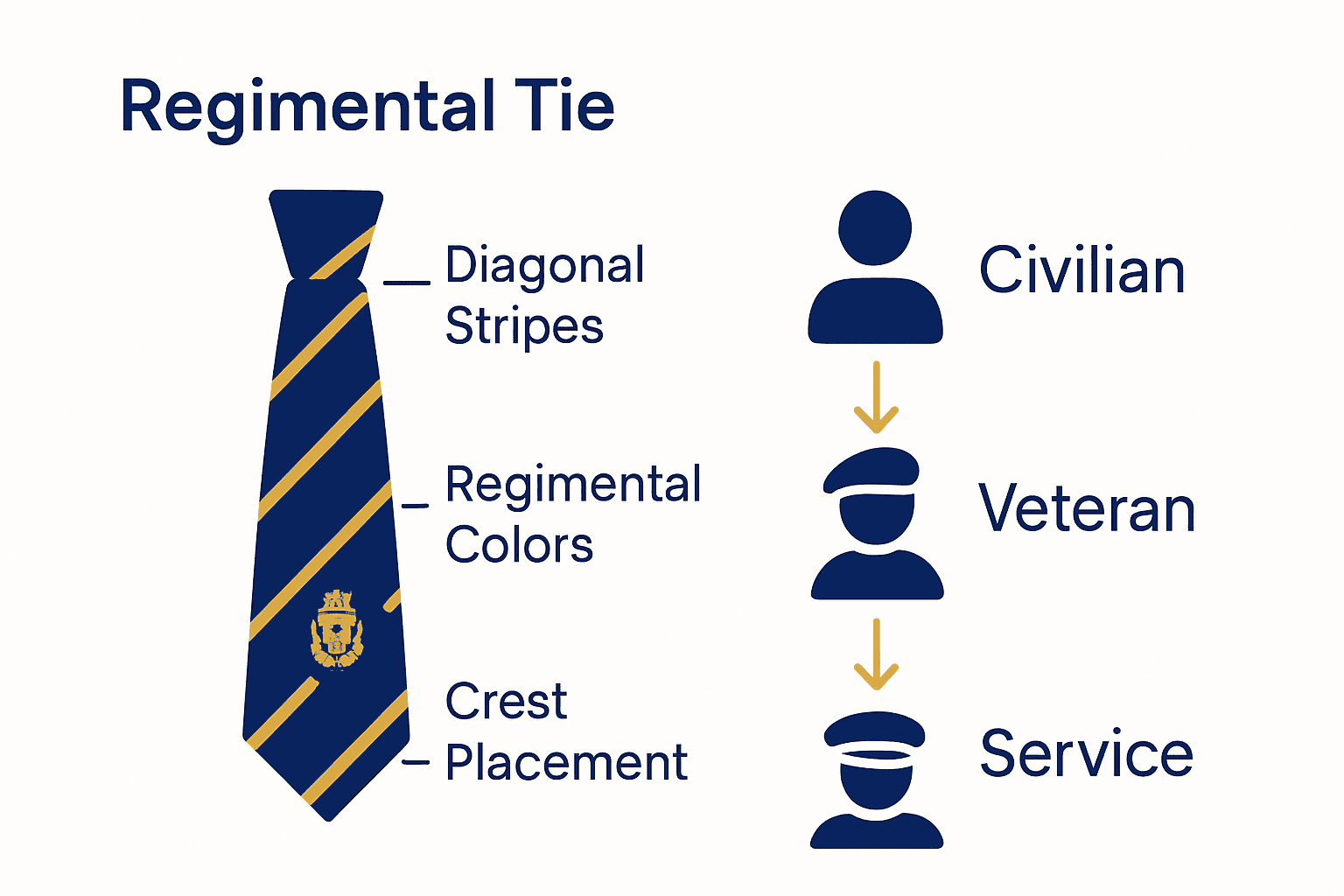
Regimental ties traditionally follow strict design principles that make them instantly recognizable. Key characteristics include:
- Diagonal striped patterns running from top-right to bottom-left
- Specific colour combinations unique to each regiment
- Precise width and proportions representing military precision
- Incorporation of regimental crests or emblematic colours
These carefully crafted accessories represent more than fashion—they are wearable historical narratives that honour military service and institutional pride.
Types of Regimental Ties Used in the UK
Regimental ties in the United Kingdom represent a rich and diverse tapestry of military heritage, with each design telling a unique story of service, tradition, and institutional pride. Military branches and specific regiments across the British Armed Forces have developed distinctive tie patterns that serve as powerful visual identifiers of their organizational identity.
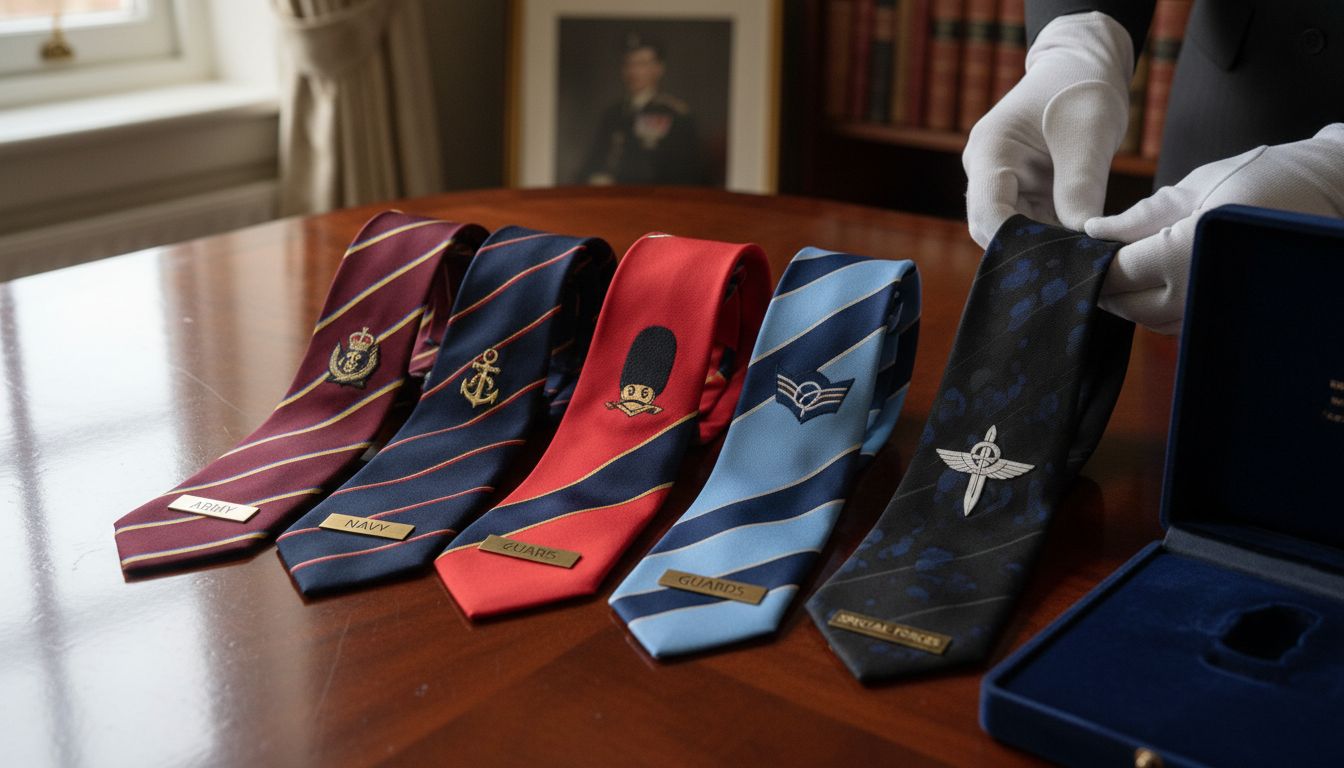
According to Filaspun, the customization of regimental ties is an intricate craft that allows for precise representation of different military units. These ties typically fall into several primary categories:
- Army Regimental Ties: Representing specific infantry, cavalry, and specialist regiments
- Royal Navy Service Ties: Featuring naval-themed colour schemes and emblems
- Royal Air Force (RAF) Ties: Incorporating distinctive blue and other service-specific colours
- Guards Regiment Ties: Showcasing the prestigious lineage of elite guard units
- Special Forces Ties: Representing specialized military units with unique design elements
Each type of regimental tie follows a meticulous design philosophy that communicates more than just aesthetic preference. The colour combinations, stripe patterns, and incorporated emblems are carefully chosen to reflect the historical significance and unique character of the specific military unit. For instance, a Guards Regiment tie might feature distinct colours like crimson and navy, while an RAF tie could incorporate distinct blues representing aerial heritage. Explore the differences between various military neckwear styles in our guide comparing clipped and regular ties.
The complexity of regimental ties extends beyond mere visual representation. They serve as a sophisticated language of military identity, with each stripe, colour, and emblem carrying deep historical and institutional meaning.
 Retired servicemen, current military personnel, and military enthusiasts alike treasure these ties as tangible connections to their regimental history, representing not just a piece of clothing, but a profound symbol of belonging, honour, and collective military tradition.
Significance of Colours, Stripes, and Patterns
Regimental ties are far more than decorative accessories—they are intricate visual languages that communicate complex narratives of military heritage, unit pride, and historical significance through carefully selected colours, stripes, and patterns.
As exemplified by the Honourable Artillery Company, the precise colour selection in regimental ties is deeply meaningful. Their regimental tie, featuring a dark-blue background with a distinctive red ribbon, demonstrates how each colour combination tells a specific story about the unit’s identity, achievements, and historical context. The colours are not randomly chosen but meticulously selected to represent:
- Unit History: Colours reflecting significant battles or historical moments
- Organizational Values: Symbolic representations of regimental ethos
- Geographical Origins: Regional colour associations
- Commemorative Significance: Colours honoring specific military achievements
The striped patterns in regimental ties follow precise geometric rules that extend beyond mere aesthetic preference. Traditionally, these stripes run diagonally from top-right to bottom-left, with specific angle measurements and colour sequences that adhere to strict heraldic principles. Each stripe width, angle, and colour intersection communicates nuanced information about the wearer’s military background, rank, and specific regimental affiliation. Discover more about military neckwear design in our comprehensive guide comparing different tie styles.
Beyond their visual appeal, these meticulously designed ties serve as portable historical documents. They preserve and communicate military traditions, allowing serving and retired personnel to instantly recognize and connect with fellow servicemembers through a shared visual language of colours, patterns, and emblematic design elements.
Each tie becomes a wearable narrative, bridging past military achievements with present-day institutional pride and collective memory.
When and How to Wear Regimental Ties
Regimental ties are sophisticated accessories with complex social and professional protocols that extend far beyond simple fashion choices. Understanding when and how to wear these meaningful garments requires careful consideration of context, occasion, and personal military heritage.
According to the Honourable Artillery Company, wearing a regimental tie is more than a sartorial decision—it’s a statement of affiliation and respect. Members typically wear ties indicating their specific sub-unit or service history, with distinct protocols for different settings:
- Formal Military Events: Mandatory wear demonstrating unit pride
- Regimental Reunions: Essential for establishing historical connections
- Commemorative Ceremonies: Symbolizing continued service and remembrance
- Professional Networking: Signaling shared military background
When selecting a regimental tie, several critical etiquette considerations come into play. Active and retired servicemembers should wear ties directly associated with their regiment or service branch, ensuring authenticity and respect for military traditions. Civilian enthusiasts should exercise discretion, typically wearing ties only with explicit permission or during appropriate historical or commemorative contexts. Explore our comprehensive guide to styling military-inspired formal wear to understand the nuanced world of military fashion.
The art of wearing a regimental tie extends beyond mere clothing—it represents a living connection to military heritage. Proper wear involves not just the tie itself, but the entire ensemble. The tie should be neatly knotted, typically with a Windsor or half-Windsor knot, and paired with a crisp white shirt and appropriate jacket. For veterans and serving personnel, this simple accessory becomes a powerful means of expressing institutional pride, commemorating service, and maintaining connections with their military community.
Etiquette, Restrictions, and Common Misconceptions
Regimental ties occupy a complex social landscape where tradition, respect, and precise unwritten rules intersect. Understanding these nuanced protocols is crucial for anyone navigating the world of military neckwear, whether as a serving member, veteran, or civilian enthusiast.
According to the Honourable Artillery Company, wearing a regimental tie is not a casual fashion choice but a deeply meaningful representation of institutional identity. Different ties are specified for various affiliations and awards, and wearing a tie without corresponding service or membership can be considered inappropriate or even disrespectful. Common misconceptions include:
- Misconception: Any military-looking tie is acceptable
- Reality: Ties must directly correlate with specific service history
- Misconception: Civilians can freely wear any regimental design
- Reality: Permission and context are critical considerations
Interestingly, Wikipedia highlights specific technical regulations, such as the Windsor knot being the only authorized tie knot for Royal Air Force and Royal Air Force Air Cadets when wearing their black tie in uniform. This illustrates how deeply regulated military dress can be, extending beyond mere colour and pattern to include precise knotting techniques. Learn more about military fashion protocols in our comprehensive styling guide.
The etiquette surrounding regimental ties is fundamentally about respect—respect for military service, institutional heritage, and the individuals who have served. Wearing such a tie is a privilege that carries significant social and historical weight. For those uncertain about their right to wear a specific regimental tie, the golden rule is to consult directly with the regiment or seek explicit permission, ensuring that this cherished tradition remains a meaningful symbol of service and camaraderie.
Honour Your Military Heritage with Authentic Regimental Ties
Understanding the true meaning behind a regimental tie reveals its deep connection to military pride and tradition. Whether you are a serving member, veteran or collector, wearing the correct colours and patterns is essential to honour your regiment’s legacy. Finding a tie that matches your specific regiment can be challenging if you are unsure where to look or want reassurance of authenticity.
Discover a curated selection of UK military gifts and personalised presentation products designed specifically for infantry and elite units. Our British Infantry Regiments Gifts and Personalised Presentations collection offers carefully crafted regimental ties that celebrate your service and unit history with respect and accuracy.
Find the perfect regimental tie that respects etiquette and tradition today. Explore our dedicated Gifts and Personalised Presentation for Veteran and serving UK Army range and connect with the spirit of your regiment. Shop confidently on Regimental Store and wear your heritage with pride.
Frequently Asked Questions
What is the significance of a regimental tie?
A regimental tie is a symbol of military heritage and unit pride, representing an individual’s specific military affiliation and historical connection within British military traditions.
How did the tradition of regimental ties originate?
Regimental ties emerged in the early 20th century as a tradition in British military culture, allowing members to express their affiliations through unique colour combinations and patterns specific to their military unit.
What are the key design principles of regimental ties?
The key design principles of regimental ties include diagonal striped patterns, specific colour combinations unique to each regiment, precise width and proportions, and incorporation of regimental crests or emblematic colours.
When should I wear a regimental tie?
Regimental ties should be worn during formal military events, regimental reunions, commemorative ceremonies, and professional networking occasions, reflecting the wearer’s specific service history and respecting military traditions.