
Complete Guide to Regimental Ties in the UK
A regimental tie carries a weight of meaning that surprises many first-time admirers. In the UK, these ties are not simply decorative items but markers of military identity and fellowship. Wearing the wrong regimental tie can signal disrespect in formal circles, highlighting how vital tradition and affiliation remain. As you explore the story behind these iconic accessories, you will uncover how they link history, honor, and personal belonging through every carefully chosen color and stripe.
Table of Contents
- Regimental Tie Meaning And Historical Roots
- Major Types Of British Regimental Ties
- Design Patterns And Symbolic Significance
- Proper Occasions And Dress Codes
- Buying Authentic Regimental Ties Online
- Common Pitfalls And How To Avoid Them
Key Takeaways
| Point | Details |
|---|---|
| Regimental Ties as Symbols | Regimental ties symbolize military heritage and pride, representing specific units and their history. Wearing a tie from a regiment you haven’t served in is considered inappropriate. |
| Types of Regimental Ties | There are distinct categories of regimental ties: Traditional, Club Tie, and Repp Tie, each with unique designs and usage contexts. |
| Significance of Design | Tie designs incorporate specific colors and patterns that convey historical and organizational identity linked to military traditions. |
| Purchase Considerations | Buyers should prioritize authenticity, quality, and adherence to traditional designs when selecting regimental ties online to avoid misrepresentation. |
Regimental Tie Meaning and Historical Roots
Regimental ties represent far more than mere fashion accessories in the United Kingdom. These distinctive neckwear items are powerful symbols of military heritage, organizational pride, and personal connection to specific military units. According to Wikipedia, these ties are traditionally associated with specific military regiments, corps, or services, and it is considered inappropriate for individuals unaffiliated with an organization to wear their distinctive tie.
The historical roots of regimental ties can be traced back to significant military reorganizations in the late 19th century. The Childers Reforms of 1881 played a crucial role in standardizing and developing these symbolic neckties. During this period, British Army infantry regiments were restructured into multi-battalion units associated with specific territorial districts. This reorganization not only transformed military structure but also established a new tradition of regimental identification through distinctive ties.
Each regimental tie tells a unique story through its colors, patterns, and design. Typically, these ties feature specific color combinations that represent the regiment’s history, battles, and traditions. Regimental colors often include:
- Specific shade combinations unique to each regiment
- Stripes or patterns representing historical achievements
- Symbolic colors representing unit heritage
These ties are more than decorative items. They are living historical artifacts that connect serving soldiers, veterans, and military enthusiasts to a rich tradition of service and camaraderie. By understanding the Clipped Tie vs. Regular Tie differences, one can appreciate the nuanced craftsmanship behind these meaningful garments.
Today, regimental ties continue to serve as powerful symbols of military pride, representing not just individual regiments but the broader narrative of British military history and tradition.
Major Types of British Regimental Ties
British regimental ties are rich with historical significance and complexity, representing a sophisticated system of military and organizational identity. According to Wikipedia, the traditional styling of regimental ties varies significantly, with different regiments adopting unique approaches to their distinctive neckwear. Not all British regiments use a standard regimental pattern in the modern era; instead, they employ diverse styles including club tie and repp tie patterns.
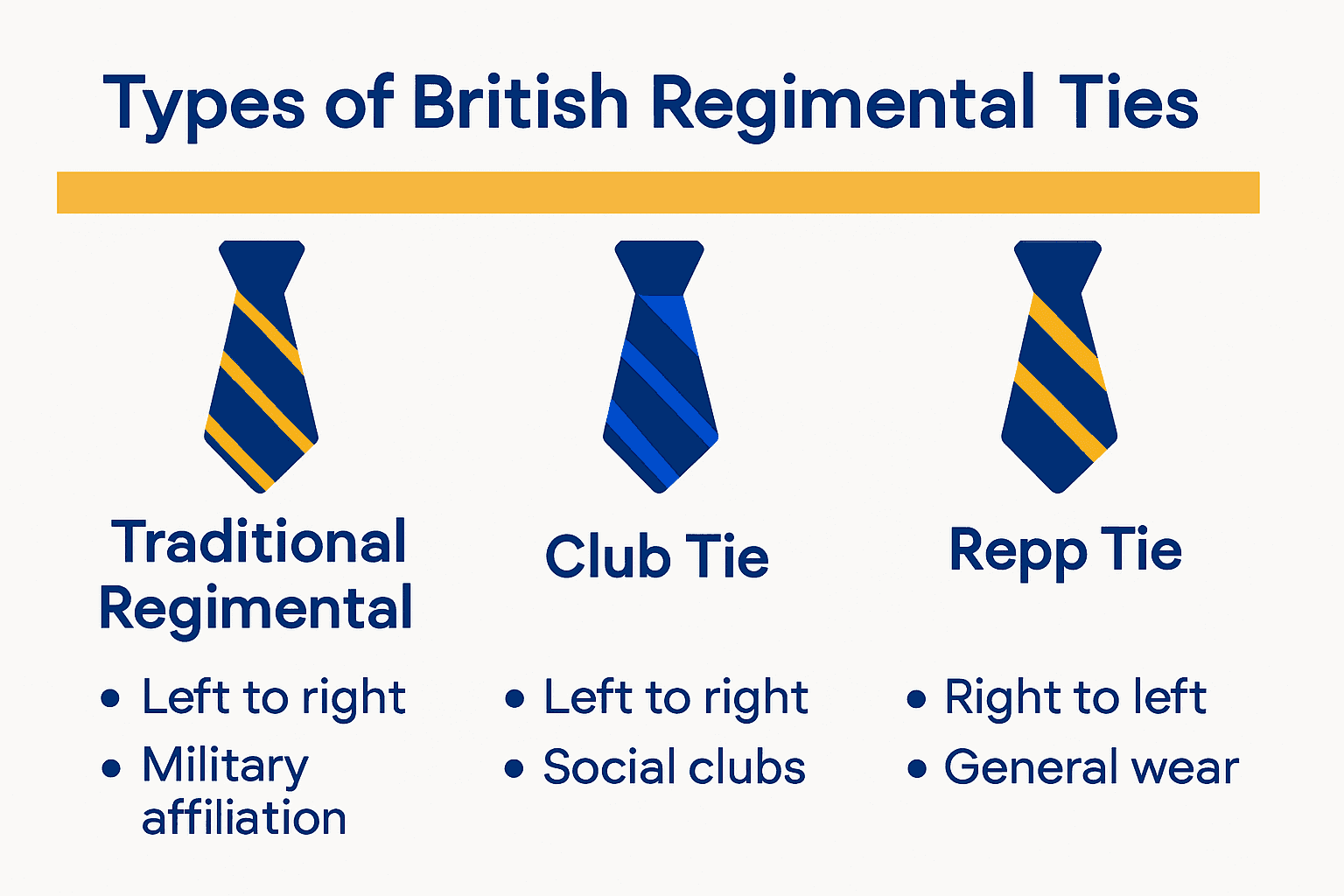
The primary categories of British regimental ties can be broadly classified into three distinctive types:
Here’s a comparison of the main types of British regimental ties discussed:
| Tie Type | Key Features | Typical Usage |
|---|---|---|
| Traditional Regimental | Specific colours and patterns Regiment-exclusive design |
Military units only |
| Club Tie Pattern | Broader stripes Used by clubs & societies Non-military |
Organisations outside military |
| Repp Tie Pattern | Diagonal stripes Symbolic meanings Historical origins |
Military & institutional |
- Traditional Regimental Tie: Featuring colors and patterns specific to a particular military regiment
- Club Tie Pattern: Often used by organizations beyond military units
- Repp Tie Pattern: Characterized by diagonal stripes representing specific unit identities
Each type of tie carries profound symbolic meaning. The colors, stripe directions, and specific design elements communicate intricate details about the wearer’s military background, service history, and organizational affiliations.
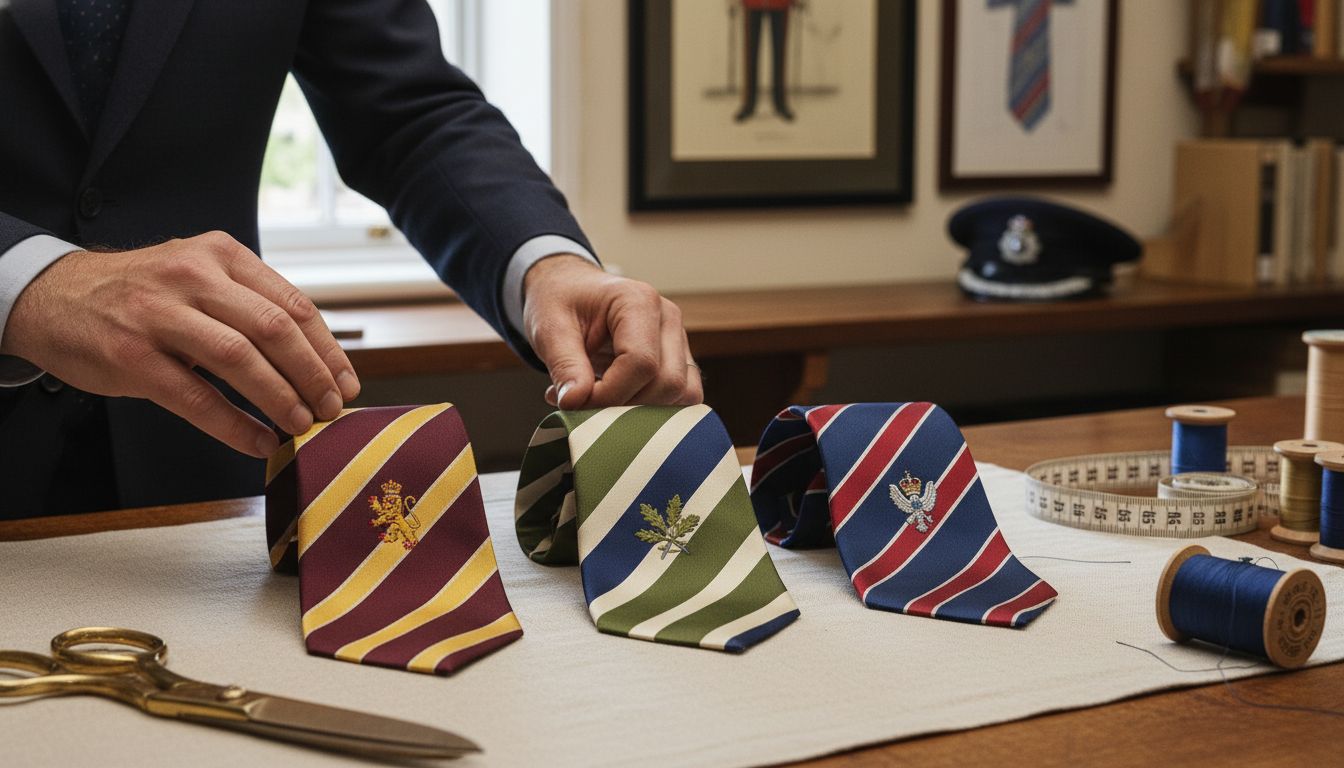 For enthusiasts interested in exploring specific military regimental ties, our Royal Highland Fusiliers tie offers an excellent example of these nuanced design traditions.
Interestingly, modern British military units continue to innovate while respecting traditional design principles. Some regiments now incorporate contemporary design elements that maintain historical authenticity while appealing to younger generations of servicemen and veterans. These ties are not merely accessories but living historical artifacts that connect military personnel across generations, preserving and celebrating Britain’s rich military heritage.
Design Patterns and Symbolic Significance
Regimental tie design is a nuanced art form deeply rooted in military tradition and symbolic communication. In Commonwealth countries, necktie stripes traditionally run from the left shoulder down to the right side, embodying the evocative expression ‘From heart to sword.’ This deliberate design is not merely decorative but serves as a powerful visual language representing organizational identity and personal affiliation.
Stripe Symbolism and Historical Significance
According to Mountain and Sackett, an authentic regimental tie is characterized by a crisp 6-ply organzine silk repp stripe. Each stripe setting is unique, with a profound historical connection dating back to the 17th century. Military regiments, universities, clubs, and societies have used these distinctive stripe patterns to distinguish themselves, creating a rich tapestry of visual communication.
The key elements of regimental tie design include:
- Stripe Direction: Typically diagonal, running from left shoulder to right hip
- Color Combinations: Specific to each regiment or organization
- Silk Quality: High-grade materials like 6-ply organzine silk
- Width and Spacing: Precise measurements reflecting traditional standards
Our Royal Air Force Service Tie exemplifies these intricate design principles, showcasing how modern ties continue to honor these time-honored traditions. The tie is more than an accessory; it’s a wearable narrative of service, pride, and historical continuity.
Modern regimental ties continue to evolve, balancing respect for traditional design elements with contemporary aesthetic sensibilities. They remain powerful symbols of identity, connecting wearers to a rich legacy of military, academic, and social traditions through their carefully crafted patterns and color schemes.
Proper Occasions and Dress Codes
Regimental ties are not merely fashion accessories but critical elements of formal military and social attire, each with specific protocols and expectations. In the British Army, mess dress represents the formal evening wear for commissioned and non-commissioned officers, where regimental ties play a crucial role in signaling organizational affiliation and adherence to strict dress codes.
Formal Occasion Classification
Different occasions demand varying levels of formality and specific tie-wearing protocols. These typically include:
- Military Formal Events: Mess dinners, regimental reunions, ceremonial gatherings
- Commemorative Ceremonies: Remembrance Day, military parades, memorial services
- Institutional Gatherings: Regimental dinners, military award ceremonies
- Civilian Formal Events: Weddings, professional networking functions
For those navigating complex formal dress requirements, our guide on styling black tie attire offers additional insights into appropriate presentation. According to the Royal Yorkshire Regiment’s handbook, a specific dress code mandates a black, silk, medium-width double-ended tie for all formal functions, underscoring the precision required in military dress protocols.
Understanding these nuanced dress codes is essential. A regimental tie is more than fabric; it’s a symbol of heritage, service, and institutional pride. Whether attending a military ceremony or a formal civilian event, wearing the correct regimental tie demonstrates respect for tradition and an understanding of complex social and military conventions.
Buying Authentic Regimental Ties Online
Purchasing an authentic regimental tie requires careful consideration and attention to detail. Collectors and military personnel alike seek ties that genuinely represent their unit’s heritage and follow traditional manufacturing standards. According to William Turner & Son, a renowned provider of military neckwear, authentic regimental ties are available in both 100% silk and polyester, meticulously crafted to reflect each unit’s unique identity.
Key Considerations for Online Purchases
When buying regimental ties online, pay close attention to these critical factors:
- Material Quality: Prefer 100% silk or high-grade polyester
- Color Authenticity: Exact regimental color schemes
- Stripe Direction: Traditional left-shoulder to right-hip orientation
- Manufacturer Reputation: Established providers with military connections
To ensure you’re getting a genuine product, look for vendors who specialize in military merchandise. Our UK military clothing selection offers authentic regimental polo shirts that complement these traditional ties, providing additional options for military enthusiasts.
Authenticity goes beyond mere appearance. A true regimental tie tells a story of tradition, service, and institutional pride. When purchasing online, verify the manufacturer’s credentials, check detailed product descriptions, and if possible, seek recommendations from regimental associations or veteran groups. Remember, a regimental tie is more than an accessory—it’s a symbol of heritage and personal connection to military history.
Common Pitfalls and How to Avoid Them
According to Wikipedia, one of the most significant etiquette challenges with regimental ties is wearing a tie associated with an organization to which you do not belong. This practice is considered highly inappropriate and can be seen as a serious breach of military and social protocol.
Critical Mistakes to Avoid
When selecting and wearing regimental ties, be aware of these potential pitfalls:
- Unauthorized Affiliation: Never wear a tie representing a regiment you have not served in
- Incorrect Stripe Design: Ensure the tie follows traditional ‘From the Heart’ orientation
- Poor Quality Imitations: Avoid mass-produced ties lacking historical authenticity
- Inappropriate Occasions: Know the specific dress codes for different events
For those interested in authentic military apparel, our UK military clothing selection offers guidance on maintaining proper standards. As Mountain and Sackett emphasizes, authentic regimental ties have unique stripe settings that run ‘From the Heart,’ a tribute to historical traditions.
Understanding these nuances is crucial. A regimental tie is not just a piece of fabric, but a symbol of honor, service, and institutional pride. Misrepresentation can be perceived as disrespectful to those who have genuinely served. Always research thoroughly, consult with regimental associations if possible, and approach the selection of a regimental tie with the utmost respect for its deep historical significance.
Discover Authentic Regimental Ties and Military Gifts to Honour Your Heritage
Wearing the correct regimental tie is more than tradition it is a powerful symbol of your service and pride. Finding authentic ties that reflect your regiment’s unique colours and patterns can be a challenge but it is essential to respect military protocol and personal history. Whether you are a serving soldier, veteran, or a proud family member, finding the right tie or gift that honours your regiment’s heritage brings a deep sense of connection and respect.
Explore our wide range of carefully crafted regimental ties and personalised presentation products designed specifically for the UK Army community at Gifts and Personalised Presentation for Veteran and serving UK Army. Complement your collection with expert selections that celebrate British military tradition by visiting The Regimental Store Ltd today. Act now to secure an authentic regimental tie that truly reflects your story and honours the legacy of your service.
Frequently Asked Questions
What is the meaning of a regimental tie?
A regimental tie symbolizes military heritage and pride, representing specific military units, corps, or services. It is not merely a fashion accessory but a badge of affiliation and honor for those connected to a regiment.
What are the main types of British regimental ties?
British regimental ties can be categorized into three main types: Traditional Regimental Ties, which feature specific colors and patterns unique to a regiment; Club Tie Patterns, used by clubs and organizations outside the military; and Repp Tie Patterns, characterized by diagonal stripes that convey unit identities.
How should a regimental tie be worn on formal occasions?
Regimental ties should be worn according to specific dress codes, particularly during military formal events such as mess dinners and ceremonial gatherings. Proper attire typically includes wearing the tie in conjunction with mess dress or other formal military uniforms.
What design elements are significant in a regimental tie?
Key design elements in regimental ties include stripe direction (typically from left shoulder to right hip), specific color combinations unique to each regiment, high-quality silk material, and precise measurements that reflect traditional standards.