
Royal Navy Memorabilia Guide: Identify and Preserve Collectibles
Did you know that the National Museum of the Royal Navy preserves an astounding 2.5 million items from Britain’s maritime past? For collectors, finding genuine Royal Navy memorabilia can feel overwhelming when so many reproductions exist. Gaining access to trusted sources and proper authentication methods unlocks a world of history that speaks through every artifact, from medals to ship relics and uniforms rich with hidden stories.
Table of Contents
- Step 1: Research Authentic Royal Navy Memorabilia Sources
- Step 2: Authenticate and Evaluate Collectible Items
- Step 3: Assess Value and Historical Significance
- Step 4: Preserve and Display Your Memorabilia Collection
- Step 5: Verify Authenticity and Maintain Collection Records
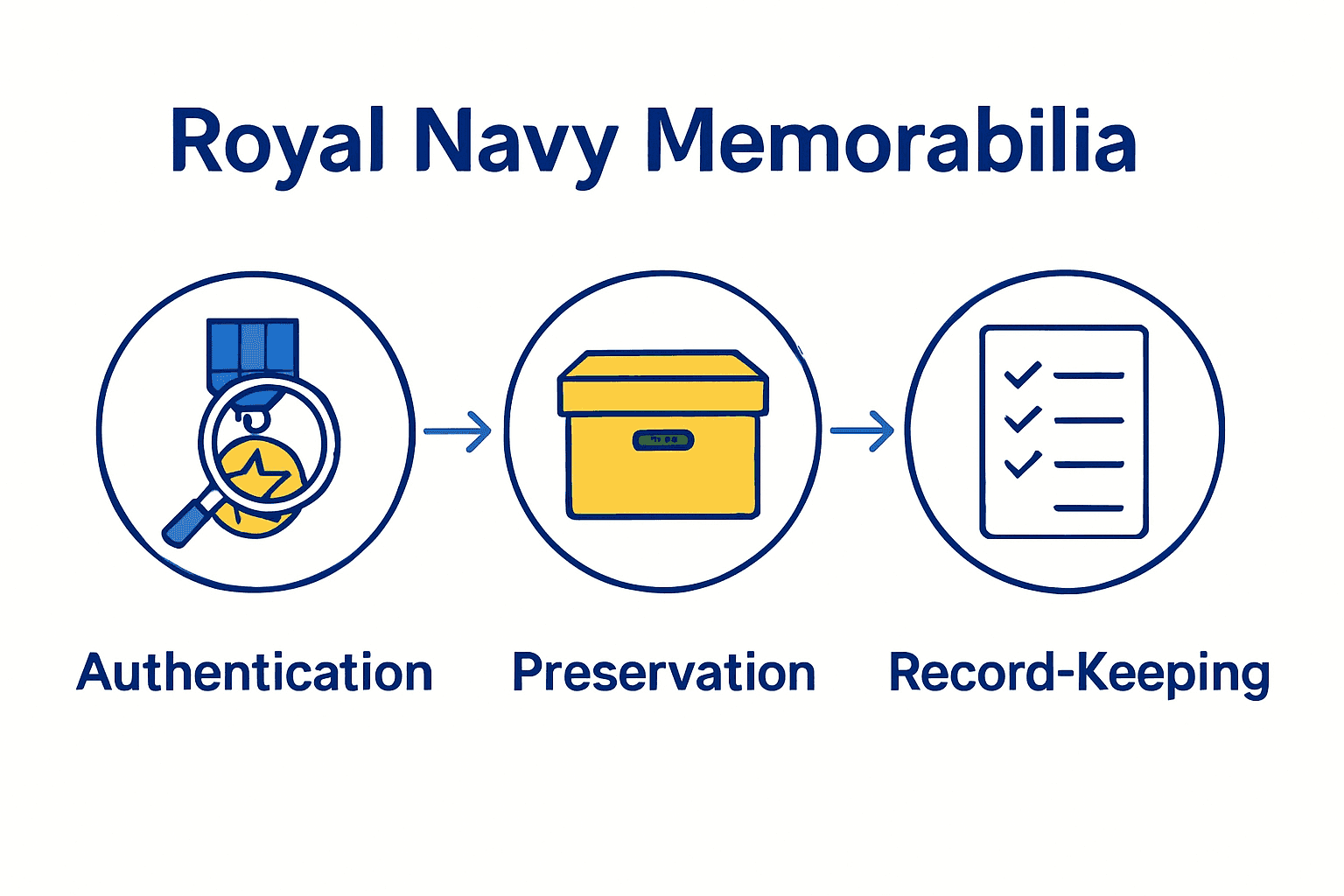
Quick Summary
| Key Point | Explanation |
|---|---|
| 1. Research Authentic Sources | Use reputable institutions like the National Museum of the Royal Navy for accurate information on memorabilia. |
| 2. Authenticate Collectible Items | Verify items through proper documentation, material analysis, and expert comparison with museum standards. |
| 3. Assess Historical Value | Evaluate memorabilia based on provenance, rarity, and significance to historical events. |
| 4. Preserve and Properly Display | Implement preservation techniques and use museum-quality display cases to protect artifacts. |
| 5. Maintain Detailed Records | Keep a thorough inventory, including photographs and provenance documentation, for each collectible. |
Step 1: Research Authentic Royal Navy Memorabilia Sources
Researching authentic Royal Navy memorabilia requires strategic investigation and access to specialised resources. This guide will help you uncover genuine historical artefacts and understand their provenance with confidence.
The most authoritative source for Royal Navy historical collections is the National Museum of the Royal Navy. Their extraordinary archive contains over 2.5 million items documenting the complete naval heritage from its earliest origins to contemporary times. By studying their collections, you can learn critical identification markers and understand the historical context of potential memorabilia.
Another exceptional research resource is the Naval Historical Branch, which maintains an impressive Admiralty Library with approximately 160,000 volumes. This extensive collection provides researchers unprecedented insights into naval documentation, uniforms, medals, and historical records. Their archives can help you verify the authenticity of potential acquisitions and understand the nuanced details that distinguish genuine artefacts from reproductions.
To conduct thorough research, consider these strategic approaches:
- Contact museum curators and naval historians directly
- Study official Royal Navy historical documentation
- Examine detailed photographic archives
- Attend specialist maritime militaria collector events
- Consult expert authentication services
Remember that thorough research is your best defence against purchasing inauthentic memorabilia. Patience and meticulous investigation will ultimately lead you to genuine Royal Navy historical treasures.
With these research strategies, you are now prepared to move forward in identifying and verifying authentic Royal Navy collectibles with scholarly precision.
Step 2: Authenticate and Evaluate Collectible Items
Authententicating and evaluating Royal Navy memorabilia requires a keen eye, extensive knowledge, and access to authoritative resources. This section will guide you through the critical process of determining the genuineness and historical significance of potential collectibles.
The National Archives provides comprehensive research guides that are instrumental in understanding how to properly authenticate Royal Navy items. Their official records offer crucial benchmarks for verifying the legitimacy of historical artifacts, helping collectors distinguish between genuine pieces and modern reproductions.
When evaluating Royal Navy memorabilia, focus on several key authentication criteria:
- Provenance documentation
- Material composition and construction techniques
- Historical accuracy of design and manufacture
- Manufacturer or regimental markings
- Condition and age appropriate wear
Careful examination requires more than visual assessment. Expert collectors recommend comparative analysis with museum standard pieces, such as those in the National Museum of the Royal Navy collection. These institutions maintain definitive archives that can help you understand intricate details distinguishing authentic artifacts.
Warning: Be extremely cautious of items without clear historical documentation or those with suspiciously perfect preservation. Genuine military memorabilia often shows subtle signs of age and use that distinguish them from modern replicas.
By developing a systematic approach to authentication, you will build the expertise needed to confidently identify and evaluate genuine Royal Navy collectibles.
Step 3: Assess Value and Historical Significance
Assessing the value and historical significance of Royal Navy memorabilia goes beyond simple monetary evaluation. This crucial step requires a nuanced understanding of historical context, rarity, and cultural importance.
The National Museum of the Royal Navy demonstrates the profound historical value of naval artifacts through their remarkable collection. Their acquisition of over 8,000 artifacts from the HMS Invincible wreck illustrates how individual items can provide extraordinary insights into maritime history.
To accurately assess the value of Royal Navy collectibles, consider these critical factors:
- Provenance and documented historical context
- Rarity and condition of the item
- Connection to specific naval battles or significant events
- Original manufacturing techniques
- Completeness of accompanying documentation
The Navy Records Society offers invaluable resources for understanding the deeper historical significance of naval artifacts. Their extensive publications can help you contextualise items beyond their physical characteristics, revealing the true historical narrative behind each piece.
Pro tip: Consult multiple expert sources and consider having valuable items professionally appraised. The historical and emotional value of Royal Navy memorabilia often transcends monetary worth.
By developing a comprehensive approach to assessment, you will gain a deeper appreciation for the rich maritime heritage represented in these remarkable collectibles.
Step 4: Preserve and Display Your Memorabilia Collection
Preserving and displaying Royal Navy memorabilia requires careful consideration of environmental conditions, storage techniques, and presentation methods. This section will guide you through protecting your valuable historical artifacts while creating an engaging display that honours their significance.
The National Archives provides comprehensive guidance on artifact preservation. Their expert recommendations emphasise the importance of controlling temperature, humidity, and light exposure to prevent deterioration of historical items.
Critical preservation strategies include:
- Use archival quality storage materials
- Control environmental conditions
- Minimise direct sunlight exposure
- Handle items with clean white cotton gloves
- Implement rotation for displayed items to reduce long term damage
The National Museum of the Royal Navy demonstrates exceptional preservation techniques that collectors can adapt for their personal collections. Their approach focuses on creating protective environments that maintain the integrity of historical artifacts while allowing them to be appreciated.
For display purposes, consider using museum grade display cases with UV protective glass and carefully controlled internal environments. These specialised cases help protect your memorabilia from dust, moisture, and environmental degradation while allowing viewers to appreciate the historical significance of each piece.
Warning: Avoid displaying valuable items in areas with significant temperature fluctuations or direct sunlight. Even minimal exposure can cause irreversible damage to historical artifacts.
By implementing these preservation strategies, you will ensure that your Royal Navy memorabilia remains in exceptional condition for future generations to appreciate and study.

Step 5: Verify Authenticity and Maintain Collection Records
Verifying the authenticity of Royal Navy memorabilia and maintaining meticulous collection records is crucial for serious collectors. This section will guide you through creating a systematic approach to documenting and authenticating your historical artifacts.
The Imperial War Museums offer exceptional resources for collectors seeking to validate their memorabilia. Their comprehensive service record archives provide critical tools for cross referencing and verifying the historical context of individual pieces.
Key steps for maintaining robust collection documentation include:
- Create a detailed digital and physical inventory
- Photograph each item from multiple angles
- Record provenance and historical context
- Document condition and any restoration work
- Secure professional authentication certificates
The Navy Records Society publishes extensive historical documents that can help collectors substantiate the authenticity of their Royal Navy memorabilia. Their publications offer invaluable historical context and verification resources for serious collectors.
Pro tip: Use archival quality record keeping methods. Digital backups combined with physical documentation create a comprehensive preservation strategy that protects both the physical artifacts and their historical narrative.
By developing a systematic and thorough approach to record keeping, you will transform your collection from mere objects into a carefully curated historical archive.
Protect Your Royal Navy Treasures with Expert Presentation and Gifts
Preserving the legacy of Royal Navy memorabilia is both rewarding and challenging. The article highlights how crucial it is to authenticate, evaluate, and carefully preserve each collectible to honour its historical significance. If you value these treasured items and want to celebrate Royal Navy heritage, choosing the right presentation and display solutions is essential.
Discover a specially curated collection designed to complement your passion. Our Royal Navy Shop for gifts and presentation Royal Marines & Submariners offers exclusive keepsakes and protective display products. 
Enhance your collection today by visiting The Regimental Store where every piece is crafted with respect for tradition and quality. Do not wait to give your memorabilia the honour it deserves. Explore our Featured Gift Ideas and find the perfect companion to your historic collection now.
Frequently Asked Questions
What are the key criteria to authenticate Royal Navy memorabilia?
To authenticate Royal Navy memorabilia, evaluate provenance documentation, material composition, historical accuracy, manufacturer markings, and condition. Examine items closely and compare them to established museum pieces to spot differences in craftsmanship.
How can I effectively research the history of my Royal Navy collectibles?
You can research your Royal Navy collectibles by studying official historical documentation, attending collector events, and consulting expert authentication services. Make a list of specific details about your items and analyze them within the context of naval history.
What steps should I take to preserve my Royal Navy memorabilia?
Preserve your Royal Navy memorabilia by using archival-quality storage materials and controlling environmental conditions like temperature and humidity. Handle items with care and minimize direct sunlight exposure to ensure long-term preservation.
How can I evaluate the value of my Royal Navy collectibles?
To evaluate the value of your Royal Navy collectibles, consider factors such as provenance, rarity, historical significance, and condition. Document your findings thoroughly, as including this information can enhance the overall value of your items.
What should I include in my collection records for Royal Navy memorabilia?
Your collection records should include a detailed inventory, photographs of each item, provenance and historical context, and documentation of any restoration work. Organize these records both digitally and physically to ensure comprehensive preservation of your collection’s legacy.
How do I find experts to help with the authentication of Royal Navy memorabilia?
To find experts for authentication, network through collector events or forums where experienced individuals can be found. Consider reaching out to professionals who specialize in military historical artifacts to gain insights and assistance with your collectibles.
Recommended
- Complete Guide to Military Memorabilia in the UK – The Regimental Store Ltd
- Complete Guide to the Meaning of Veteran Memorabilia – The Regimental Store Ltd
- Royal Navy Presentation Gifts - White Ensign & HM Ships Memorabilia Storage Box – The Regimental Store Ltd
- Royal Navy Presentation Award Desk Plaque – The Regimental Store Ltd