
Royal Air Force Badge: Meaning, Types and Heritage
Most british service members proudly wear symbols of their achievements, yet few realize that every Royal Air Force badge carries over one hundred years of history. Understanding the origin and meaning behind these badges uncovers stories of courage, heritage, and royal connection. Whether you are seeking to honor your own service or searching for a meaningful gift, discovering the deeper history of these emblems can add an extra layer of appreciation to your military experience.
Table of Contents
- Royal Air Force Badge Meaning and Origins
- Types of RAF Badges and Their Differences
- Symbolism and Design Elements Explained
- Wearing and Displaying RAF Badges Properly
- RAF Badge Ownership, Restrictions and Traditions
Key Takeaways
| Point | Details |
|---|---|
| Royal Air Force Badge Significance | The Royal Air Force badge represents British aerial commitment, embodying honour and heritage since its establishment in 1918. |
| Types of RAF Badges | RAF badges include Station, Squadron, Branch, and Commemorative badges, each reflecting unique identities and operational specialisations. |
| Symbolic Elements | Each element of the RAF badge, including the eagle and royal crown, signifies core values like strength, authority, and commitment to excellence. |
| Badge Ownership Protocol | Strict regulations govern who may wear RAF badges, signifying a profound historical connection and respect for service and sacrifice in the military. |
Royal Air Force Badge Meaning and Origins
The Royal Air Force badge represents far more than a mere heraldic symbol - it embodies the proud history and resolute spirit of British aerial combat. First established in August 1918, the badge emerged during a pivotal moment in military aviation history, symbolising the newly formed Royal Air Force’s commitment to national defence.
At the heart of the badge design lies a powerful heraldic composition: an eagle superimposed on a circlet, topped with a royal crown. This emblematic imagery was carefully crafted to represent fundamental military virtues. The eagle symbolises aerial strength, power, and vigilance, while the crown denotes the organisation’s direct connection to royal authority. Interestingly, the original design initially featured a garter and buckle, which were replaced with a plain circlet in 1923 to correct heraldic technicalities.
The badge’s evolution reflects the RAF’s own transformation through decades of military service. From its inception during the First World War to its critical role in the Second World War and subsequent global conflicts, the badge has remained a constant symbol of courage, precision, and national pride. Its design communicates the essential qualities required of RAF personnel: keen observation, strategic thinking, and unwavering commitment to protecting British skies.
Pro Tip: When examining military badges, always look beyond the visual design and consider the historical context and symbolic meanings embedded within each element.
Types of RAF Badges and Their Differences
The Royal Air Force utilises a complex and nuanced system of heraldic badges that reflect the organisation’s rich hierarchical structure and diverse operational heritage. Each level of the RAF hierarchy possesses its own distinctive badge, from the overarching central emblem down to individual squadron insignia, creating a intricate tapestry of military symbolism.
These badges are not merely decorative elements but serve as powerful representations of unit identity, history, and operational specialisation. The primary categories of RAF badges include: Station Badges, which represent specific Royal Air Force bases and locations; Squadron Badges, which capture the unique character and achievements of individual flying units; Branch Badges, representing different professional specialisations within the service; and Commemorative Badges, which honour significant historical events or wartime achievements.
The design of these badges follows strict heraldic principles, with each element carefully chosen to communicate specific meanings. Symbols might include mythological creatures, historical references, geographical imagery, or abstract representations of aerial warfare. Colours, shapes, and motto selections are meticulously considered to reflect the unit’s ethos, operational role, and historical lineage. Some badges incorporate Latin phrases, traditional heraldic animals, or stylised representations of aircraft and military equipment.
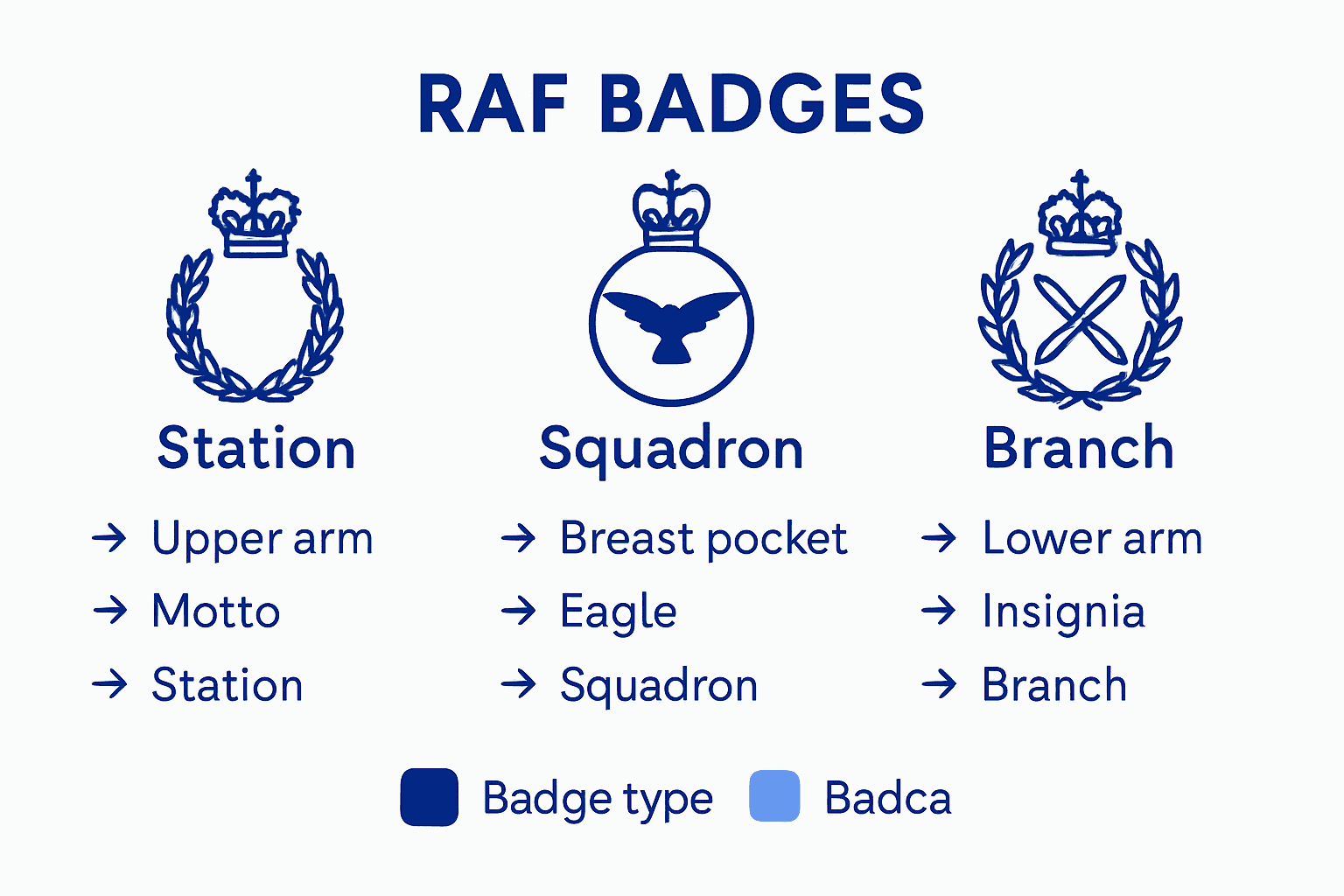
The table below summarises the primary types of RAF badges and what each represents:
| Badge Type | Represents | Typical Features |
|---|---|---|
| Station Badge | Specific RAF base or location | Local landmarks, historic motifs |
| Squadron Badge | Individual flying unit | Unique symbols, unit-specific insignia |
| Branch Badge | Professional specialisation | Equipment, tools, related icons |
| Commemorative Badge | Significant event or achievement | Dates, event symbols, special mottos |
Pro Tip: When collecting or studying RAF badges, pay close attention to the subtle heraldic details - each symbol and colour tells a story about the unit’s proud history and operational specialisation.
Symbolism and Design Elements Explained
The Royal Air Force badge is a masterpiece of heraldic symbolism, with every element carefully chosen to represent the service’s profound history and enduring spirit. The iconic design incorporates multiple symbolic components that communicate the RAF’s core values and heritage, each with a carefully considered meaning that speaks to the organisation’s identity.
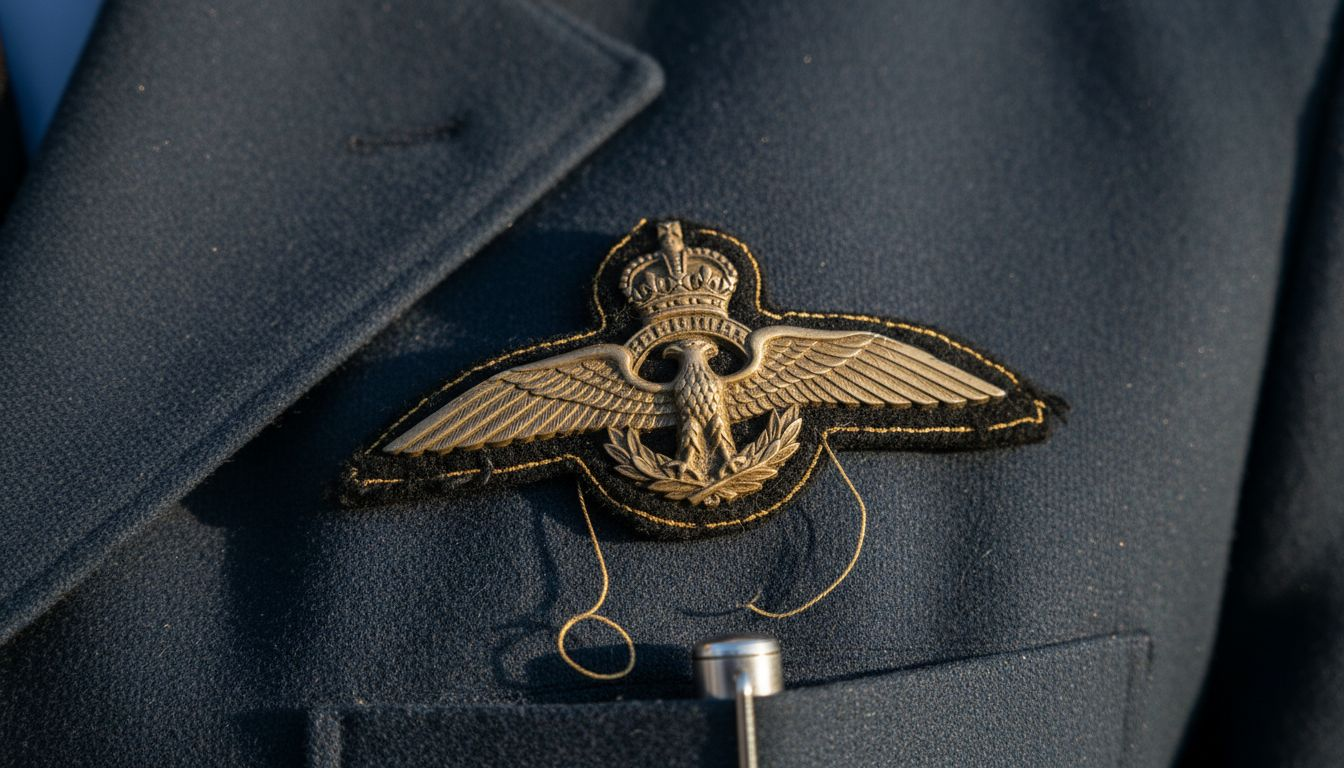
At the heart of the badge’s design lies the majestic eagle, a powerful symbol of aerial supremacy and military strength. This central figure represents the RAF’s primary mission: mastery of the skies. Surrounding the eagle, the circlet bears the legendary motto Per Ardua Ad Astra - ‘Through Adversity to the Stars’ - which encapsulates the service’s commitment to overcoming challenges and achieving excellence. The royal crown positioned above the emblem signifies the direct connection to sovereign authority and the unit’s royal mandate.
The evolution of the badge’s design reflects the RAF’s own journey through military history. From the original Royal Flying Corps pilot’s wings, which featured a swift’s wings and monogram, to the current sophisticated emblem, each iteration tells a story of progression, adaptation, and unwavering dedication. Colours, shapes, and heraldic elements are not merely decorative but serve as a visual language communicating the unit’s operational specialisation, historical achievements, and collective identity.
Pro Tip: When examining military badges, look beyond the surface - each line, colour, and symbol carries a narrative of courage, sacrifice, and institutional pride.
Here is a reference comparing key symbolic elements found in RAF badge designs:
| Symbolic Element | Represents | Example Usage |
|---|---|---|
| Eagle | Aerial supremacy, power | Central figure on main badge |
| Royal Crown | Royal endorsement, authority | Positioned above main emblem |
| Latin Motto | Honour and aspiration | ‘Per Ardua Ad Astra’ |
| Mythical Creature | Unique unit attributes | Griffins, dragons on squadron badges |
Wearing and Displaying RAF Badges Properly
Wearing RAF badges is an art form that requires precision, respect, and understanding of military protocol. The placement and manner of displaying these insignia are governed by strict guidelines that reflect the service’s rich traditions and professional standards. Tactical recognition flashes (TRFs) play a crucial role in identifying personnel on combat clothing, serving as a quick visual identifier for regiment and corps.
The positioning of RAF badges follows a meticulous system with specific rules for different contexts. On dress uniforms, the primary badge is typically worn on the cap, with squadron or unit badges positioned on the right arm or jacket. Mess dress and parade uniforms have their own nuanced placement requirements, with badges carefully arranged to showcase unit history and individual achievements. For serving personnel, these badges are more than mere decorations - they represent personal and collective honour, telling a story of service, specialisation, and commitment.
Special consideration must be given to the condition and presentation of these badges. They should be kept clean, properly aligned, and maintained with the same care and attention that RAF personnel apply to their professional duties. Veteran and retired personnel often continue to wear badges with pride, maintaining a connection to their unit and service history. The placement can vary slightly between active duty, ceremonial events, and civilian commemorative occasions, each context requiring its own subtle approach to badge display.
Pro Tip: Always ensure your RAF badge is positioned precisely and maintained impeccably - it’s a reflection of your personal pride and respect for military tradition.
RAF Badge Ownership, Restrictions and Traditions
The ownership and presentation of Royal Air Force badges represent a deeply meaningful tradition steeped in military protocol and royal heritage. The granting of a badge is a profoundly personal honour, establishing a direct connection between the monarch and the specific military unit, with each insignia carrying significant symbolic weight.
Strict regulations govern the use and display of RAF badges, ensuring they maintain their prestigious status and inherent meaning. Only serving and retired personnel, along with those formally authorised, may wear official badges. Unauthorized reproduction or wearing of these badges is considered a serious breach of military etiquette. The badges are not merely decorative items but represent a sacred trust, symbolising collective achievements, individual sacrifice, and institutional pride. Different badges denote specific ranks, units, achievements, and operational specialisations, creating a complex visual language understood within military circles.
The heraldic traditions surrounding RAF badges extend beyond simple ownership. Each badge is meticulously designed, with crowns and specific emblematic elements precisely positioned to communicate historical lineage and royal endorsement. The Crown Ensignment - whether bearing a King’s or Queen’s Crown - signifies the direct royal approval and connection, transforming these badges from mere insignia to powerful statements of institutional identity. Veterans and serving personnel alike treat these badges with profound respect, understanding they represent not just personal history, but the collective narrative of the Royal Air Force.
Pro Tip: Respect the heritage of your badge - it’s more than an accessory, it’s a living piece of military history that connects you to generations of service and sacrifice.
Discover Authentic Royal Air Force Badges and Gifts at The Regimental Store
Understanding the deep symbolism and heritage behind the Royal Air Force badge reveals a powerful story of honour, commitment and service. Whether you seek a meaningful way to celebrate a loved one’s RAF service or want to proudly wear a badge that reflects your own RAF identity, it is essential to choose products that respect tradition and military protocol. Our carefully crafted range recognises the importance of each emblem’s history and significance, offering you authentic badges, personalised gifts and presentation items designed with the same attention to heraldic detail described in the article.
Explore the Royal Air Force Shop for gifts and presentation products with RAF for truly special keepsakes that honour RAF heritage. Each item upholds the pride and precision that you value. Act now to secure a lasting tribute to courage and dedication. Visit The Regimental Store and start your journey with military-quality badges and gifts that resonate deeply with the meaning of your service.
Also discover unique collections honouring the Royal Navy and other regiments through our Royal Navy Shop and Royal Highland Fusiliers Museum Shop. Genuine symbols of heritage are waiting for you.
Frequently Asked Questions
What does the Royal Air Force badge symbolise?
The Royal Air Force badge represents the proud history and spirit of British aerial combat, incorporating elements that signify aerial strength, royal authority, and military virtues.
What are the different types of RAF badges and their meanings?
RAF badges include Station Badges, Squadron Badges, Branch Badges, and Commemorative Badges, each representing specific locations, units, professional specialisations, or significant historical events.
How should RAF badges be worn and displayed?
RAF badges should be worn according to strict military protocols, with primary badges typically placed on the cap and squadron badges on the right arm or jacket. Proper maintenance and positioning are essential to reflect personal pride and military tradition.
What are the restrictions surrounding the ownership of RAF badges?
Only serving and retired personnel, along with those authorised, may wear official RAF badges. Unauthorized reproduction or wearing is a serious breach of military etiquette, as these badges represent significant historical and institutional meaning.
Recommended
- Blazer Badge Explained: Meaning, Types, and Traditions – The Regimental Store Ltd
- RAF Memorabilia: Honouring Service and Heritage – The Regimental Store Ltd
- Wire blazer badge for the Royal Air Force and RAF Regiment. – The Regimental Store Ltd
- Regimental Blazer: Complete Guide for UK Military Audience – The Regimental Store Ltd