
Role of Badges in Military Identity – Legacy and Belonging
Most British service members can spot the difference between a regimental badge and a medal in seconds, yet few realize that these symbols carry centuries of history within every thread and engraving. Military badges are central to British military identity, weaving together tradition, service stories, and unit pride with striking clarity. Uncover the real significance behind these emblems and see how heritage, achievement, and belonging are shaped by each carefully designed badge.
Table of Contents
- Defining Military Badges And Identity
- Types And Placement Across UK Forces
- Symbolism And Heritage In Badge Design
- Regulatory Standards And Award Procedures
- Common Mistakes With Badge Acquisition
- Badges Versus Other Military Insignia
Key Takeaways
| Point | Details |
|---|---|
| Significance of Military Badges | Badges are not merely decorative; they encapsulate an individual’s military journey and collective heritage. |
| Regulatory Framework | Stringent regulations govern badge design and approval, ensuring historical integrity and unit pride. |
| Common Application Pitfalls | Misunderstanding eligibility and documentation requirements can lead to badge acquisition errors; thorough research is essential. |
| Insignia Differences | Military badges differ from medals and rank insignia, focusing on regimental identity and qualifications rather than singular achievements. |
Defining Military Badges and Identity
Military badges represent far more than decorative symbols - they are profound narrative devices communicating personal and collective military heritage. These intricate insignia encapsulate the complex stories of service, belonging, and institutional memory within the British Armed Forces. Military uniform badges serve as immediate visual indicators of an individual’s professional journey, rank, qualifications, and regimental affiliations.
Traditionally, these badges incorporate elaborate design elements that connect soldiers to their regiment’s unique history. Regimental badges frequently feature symbols representing royal dynasties, geographic origins, or significant battle honours, transforming them from mere metallic emblems into powerful representations of collective identity. Each badge tells a story - of courage, sacrifice, and institutional pride that transcends individual service.
The systematic regulation of military badges began in the mid-1700s, when military leadership standardised their design and placement. This strategic approach ensured that badges could communicate precise information about a soldier’s background, achievements, and unit at a single glance. Modern military badges continue this tradition, serving as dynamic markers of professional progression, with each addition or change reflecting an individual’s evolving military narrative.
Pro tip: When examining military badges, look beyond their aesthetic - each symbol, colour, and design element carries deep historical and personal significance.
Types and Placement Across UK Forces
Across the British military, badges represent a complex system of identity and tradition, with regimental badges strategically positioned to communicate crucial information about a soldier’s unit, rank, and service history. Each branch of the Armed Forces - Army, Royal Navy, and Royal Air Force - maintains distinctive badge placement protocols that reflect deep-rooted institutional traditions.
In the British Army, badge placement is particularly nuanced. Infantry regiments typically display cap badges that incorporate historical symbols, regimental numbers, or geographical references. Arm badges indicate specialisations, qualifications, and unit affiliations, creating a visual narrative of a soldier’s professional journey. These military badge configurations are not merely decorative but serve as immediate visual communication tools that convey complex institutional hierarchies and individual achievements.
The Royal Navy and Royal Air Force similarly employ intricate badge systems, with placements on uniforms, berets, and ceremonial dress reflecting rank, specialisation, and operational experience. Each badge tells a story - from initial training to operational deployments, commemorating service, skill, and dedication. The precise positioning of these badges follows strict regulations, ensuring a standardised yet deeply personal representation of military identity.
Pro tip: Observe a military badge closely - its placement, design, and accompanying details reveal far more about a soldier’s journey than a casual glance might suggest.
Symbolism and Heritage in Badge Design
Military badges represent a sophisticated visual language of heritage and identity, with each design carefully crafted to communicate regimental legacy. These intricate emblems are far more than decorative elements, serving as powerful symbols that encapsulate generations of military tradition, courage, and institutional memory. Royal dynasties, historical battles, and regional connections are meticulously woven into every metallic insignia.
The Army Air Corps badge provides a quintessential example of this rich symbolic tradition. Military heraldry design incorporates powerful imagery such as the eagle - representing strength and vision - alongside laurel wreaths symbolising honour, all surmounted by a crown representing royal authority. Such emblematic choices are never arbitrary but deliberately selected to reflect the unit’s core values, operational history, and collective identity.
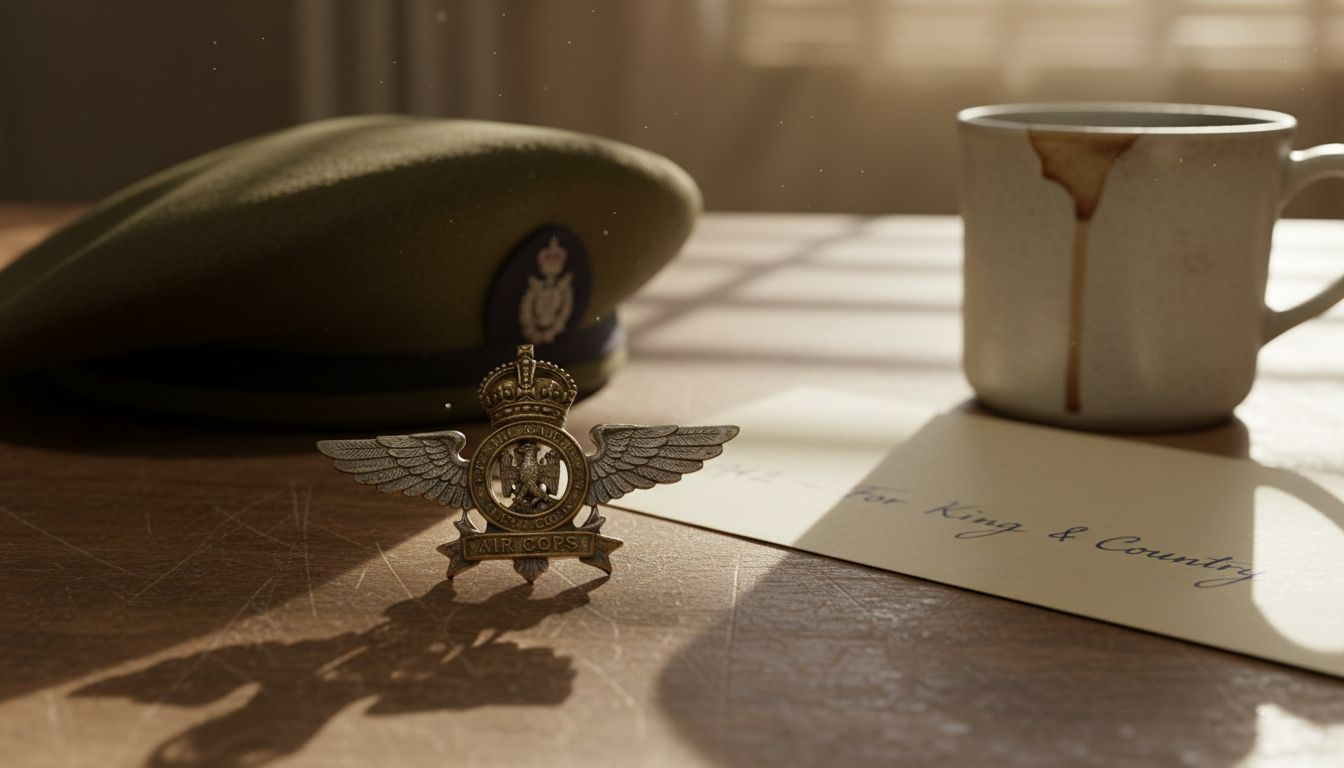
These badge designs evolve carefully, with modifications strictly controlled to preserve historical continuity. Each element - from colour palette to geometric arrangement - communicates specific information about the regiment’s lineage, operational specialisations, and distinguished service. The badges function as a visual narrative, connecting contemporary servicemen and women with their predecessors through a continuous thread of military heritage.
Pro tip: When examining a military badge, look beyond its surface - every symbol, colour, and line represents a story of service, sacrifice, and institutional pride.
Regulatory Standards and Award Procedures
Since the mid-1700s, British military forces have maintained rigorous badge design regulations that ensure consistency, authenticity, and historical integrity across all units. These systematic protocols prevent arbitrary symbol usage and maintain a disciplined approach to military insignia, with high command carefully controlling every aspect of badge representation and design.
The Royal Air Force exemplifies this meticulous regulatory approach through its comprehensive badge approval process. RAF heraldic badge protocols require extensive documentation, including detailed unit history, operational achievements, and symbolic justification. Each proposed badge undergoes multiple layers of scrutiny, including heraldic review, historical verification, and ultimately requires royal assent before official recognition.
The approval mechanism extends beyond mere aesthetic considerations. Units must demonstrate operational continuity, historical significance, and a compelling narrative that justifies their unique badge design. This stringent process ensures that military badges remain more than decorative elements - they are living historical documents that communicate institutional memory, unit pride, and collective achievements. The regulatory framework protects the integrity of military symbolism while allowing sufficient flexibility for units to express their distinctive identities.
Pro tip: When examining a military badge, remember that every line, colour, and symbol has been meticulously evaluated and approved through a complex regulatory process.
Common Mistakes with Badge Acquisition
Veterans and service members often encounter significant challenges when attempting to acquire military badges, with badge eligibility complexities creating numerous potential pitfalls. Understanding the nuanced requirements becomes crucial to preventing incorrect applications or misunderstandings about badge entitlements. Common errors include applying without fully comprehending specific service criteria, misinterpreting badge types, or failing to provide comprehensive documentation of military service.
One particularly complex area involves special commemorative badges like the Silver War Badge. Military badge validation requires precise understanding of historical context and specific eligibility conditions. Many applicants mistakenly assume broad entitlements without recognising the stringent verification processes. For instance, badges issued for service-related incapacity have distinctly different requirements from standard service commemorations, demanding meticulous attention to individual circumstances.
Navigating badge acquisition demands careful research and thorough documentation. Applicants must distinguish between various badge types - veterans’ badges, service medals, regimental insignia - each with unique qualification criteria. Incorrect assumptions can lead to frustrating rejections or potentially inappropriate badge claims. The key is understanding the specific regulations governing each badge type, verifying personal eligibility, and preparing comprehensive supporting evidence that demonstrates service qualifications.
Here is a quick reference to common application pitfalls when seeking UK military badges:
| Common Error | Why It Occurs | How to Avoid |
|---|---|---|
| Ignoring eligibility criteria | Misreading official requirements | Check current regulations |
| Confusing badge types | Overlapping badge categories | Use official guidance |
| Incomplete documentation | Missing service records or proof | Gather all required papers |
| Assuming automatic approval | Belief service guarantees all badges | Verify specific entitlements |
Pro tip: Always verify your exact badge entitlements directly with official military records offices and collect all necessary documentation before submitting an application.
Badges Versus Other Military Insignia
Military insignia form a complex visual language, with military badge classifications revealing critical distinctions between different types of recognition. Unlike medals that commemorate specific achievements or rank insignia indicating hierarchical status, badges primarily communicate regimental identity, specialist qualifications, and unit membership. This nuanced system allows immediate visual identification of a service member’s professional background and institutional affiliations.
Uniform insignia types serve distinct purposes within military dress protocols. Medals are mounted separately to honour valorous actions or long-service periods, whereas badges are integrated directly into uniform elements like headdress or sleeves. Rank insignia represent hierarchical progression, while regimental badges encapsulate deeper narratives of institutional heritage and collective identity.
The strategic placement and design of each insignia type communicate specific information. Rank badges indicate an individual’s current position within military hierarchy, medals chronicle significant service achievements, and regimental badges represent a deeper connection to unit history and traditions. This intricate system allows for immediate recognition of a service member’s professional journey, achievements, and institutional affiliations without requiring extensive conversation or documentation.
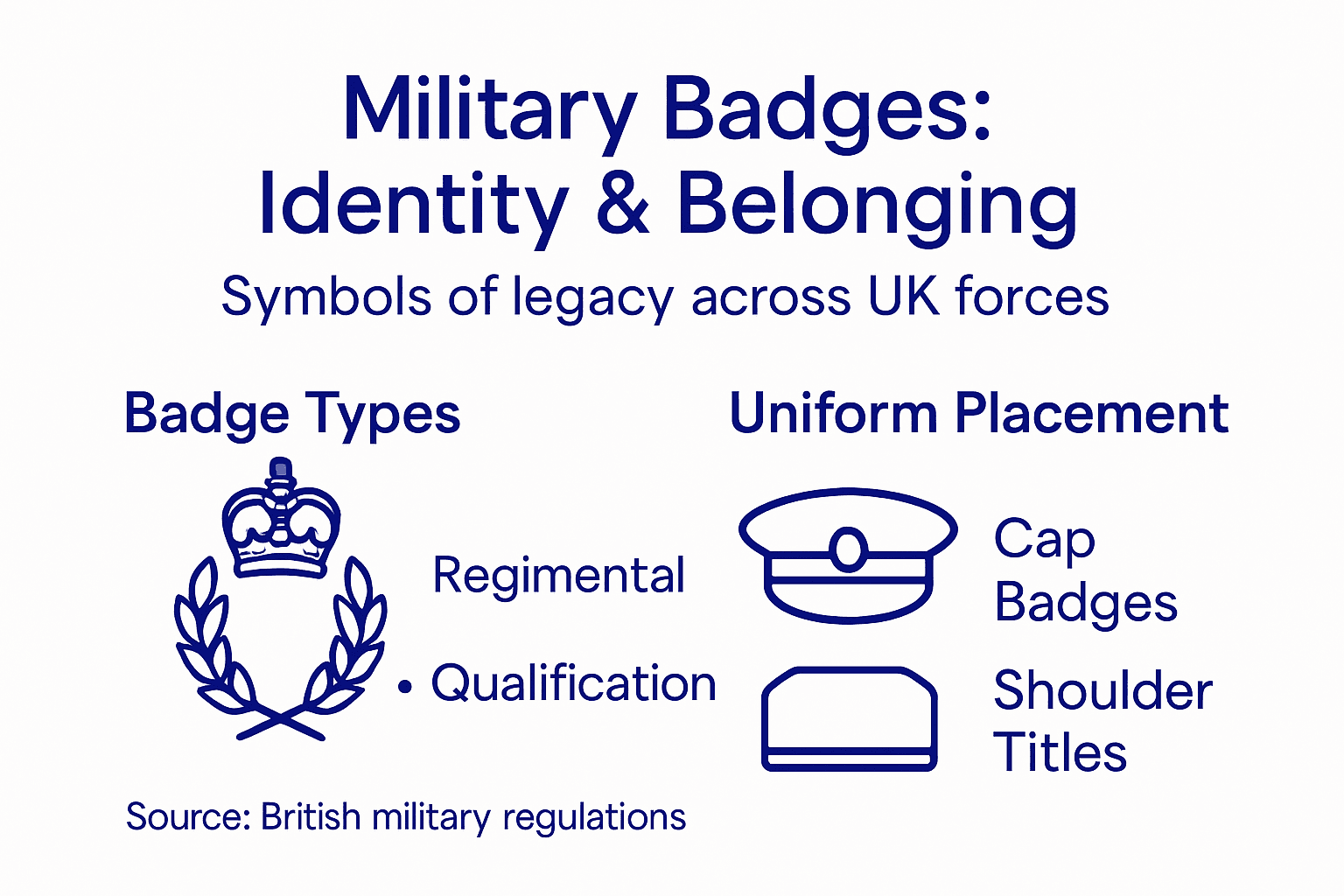
The table below summarises the distinguishing features of military badges versus other major uniform insignia:
| Insignia Type | Main Purpose | Placement on Uniform | Information Conveyed |
|---|---|---|---|
| Regimental Badge | Indicates unit identity | Headdress or collar | Regiment affiliation, heritage |
| Rank Insignia | Denotes hierarchical status | Shoulders, sleeves, cuffs | Military rank, command responsibility |
| Qualification Badge | Shows specialist training | Sleeve, chest | Skills, training achievements |
| Medals | Honours individual achievement | Separate mount on chest | Valour, long service, specific deeds |
Pro tip: Carefully observe the placement and design of military insignia - each element tells a sophisticated story about an individual’s military service and institutional identity.
Honour Your Service and Legacy with Authentic Military Badges
The article highlights the powerful symbolism behind military badges and the challenges veterans face when acquiring them correctly. If you value the deep heritage and personal stories encapsulated in each regimental badge, understanding eligibility and authenticity is crucial. At Regimental Store, we share your commitment to preserving this profound military identity by offering genuine UK military gifts and badges designed to celebrate your service and belonging within the British Army, Royal Navy, and Royal Air Force.
Explore our carefully curated collection to find badges and presentation products that truly reflect your unit pride and professional journey. Don’t risk inaccurate or unauthorised insignia – secure your authentic symbol of service now to honour your legacy with dignity and respect. Visit Regimental Store today and carry forward the tradition that your badge represents.
Frequently Asked Questions
What is the significance of military badges in conveying identity and heritage?
Military badges serve as profound symbols that communicate an individual’s professional journey, rank, qualifications, and connections to their regiment and its history, encapsulating stories of service and belonging.
How are military badges designed and what do their elements represent?
Military badge designs incorporate various symbols, colours, and imagery that reflect royal dynasties, historical battles, and regional significance, each carefully chosen to represent a unit’s values and legacy.
What distinguishes military badges from other types of insignia?
Military badges primarily indicate regimental identity and qualifications, whereas medals commemorate specific achievements and rank insignia denote hierarchy, enabling immediate visual recognition of a service member’s background.
How can service members ensure they are applying for the correct military badges?
To avoid common pitfalls, applicants should thoroughly research eligibility criteria, distinguish between various badge types, and gather complete documentation of their military service to support their application.
Recommended
- Why Display Military Badges: Honouring Service in the UK – The Regimental Store Ltd
- Significance of Arm Badges in British Army Life – The Regimental Store Ltd
- Cap Badges Explained: Meaning for UK Forces – The Regimental Store Ltd
- Blazer Badge Explained: Meaning, Types, and Traditions – The Regimental Store Ltd