
Commemorative Medals: Their Role in UK Military Heritage
Receiving a medal often marks a turning point in a service member’s career. For those in the British Armed Forces, commemorative medals capture moments of personal sacrifice and historic achievement that shape military identity. Far beyond decorative value, these medals stand as enduring symbols of courage, national pride, and the rich heritage preserved by British military tradition. Discover how their stories, unique designs, and meanings connect generations and honour those who have served.
Table of Contents
- Commemorative Medals Defined and Misunderstood
- Key Types of UK Commemorative Medals
- How Commemorative Medals Are Awarded
- Historical Significance and Military Traditions
- Wearing, Ownership, and Legal Restrictions
Key Takeaways
| Point | Details |
|---|---|
| Commemorative Medals Are Significant Artefacts | They serve as tangible records of military service, honouring sacrifices and national pride. |
| Distinct Medal Types Reflect Historical Contexts | Various medals represent unique military achievements and cultural significance within the UK. |
| Awarding Process Is Structured and Rigorous | Medals are awarded based on specific eligibility criteria, ensuring meaningful recognition of service. |
| Legal Regulations Govern Medal Use | There are strict protocols for wearing and owning medals, preserving their dignity and historical importance. |
Commemorative Medals Defined and Misunderstood
Commemorotive medals represent far more than simple metal and ribbon - they are tangible historical records capturing profound moments of military service and sacrifice. These artefacts tell stories of courage, dedication, and national pride through carefully crafted symbols and design elements that honour individual and collective achievements.
At their core, commemorative medals serve multiple crucial functions within British military heritage. British military collections demonstrate how these medals transcend mere decorative objects, becoming important historical documentation that preserves individual and regimental narratives. They function as physical testimonials of service, marking specific campaigns, battles, and periods of national significance.
Key characteristics that distinguish commemorative medals include:
- Historical Documentation: Recording specific military campaigns and operations
- Personal Recognition: Honouring individual service members’ unique contributions
- Regimental Pride: Representing collective achievements of military units
- Cultural Preservation: Maintaining connections between current and past military generations
While many civilians might perceive these medals as simple decorative items, military personnel understand their profound symbolic weight. Each medal represents a complex narrative of sacrifice, bravery, and institutional memory. The intricate designs, specific clasps, and unique ribbons communicate nuanced details about the recipient’s service history that go far beyond superficial ornamentation.
Pro tip: When examining a commemorative medal, look closely at its ribbon colours and design elements - they often reveal fascinating stories about the specific campaign or service period it represents.
Key Types of UK Commemorative Medals
The landscape of United Kingdom commemorative medals is rich and diverse, reflecting centuries of military and historical tradition. Coronation medals have been issued to soldiers participating in royal ceremonies since the 16th century, representing a fascinating subset of military commemorative artefacts that honour significant national events.
British commemorative medals can be categorised into several distinct types, each with unique historical significance:
- Campaign Medals: Recognising specific military operations and conflicts
- Coronation Medals: Celebrating royal ceremonies and national milestones
- Service Medals: Honouring long-term military service and commitment
- Gallantry Medals: Acknowledging extraordinary bravery and individual heroism
- Regimental Medals: Representing specific military unit achievements
- Temperance Medals: Reflecting social and moral campaigns within military contexts
Each medal type carries profound symbolic meaning beyond its physical representation. Coronation medals, for instance, serve as tangible connections to royal history, while campaign medals document specific military engagements that shaped national identity. The intricate designs, carefully selected ribbon colours, and specific clasps communicate complex narratives about the recipient’s service and the historical context of their achievements.
Here’s a summary of major UK commemorative medal types and what makes each unique:
| Medal Type | Typical Recipient | Symbolic Meaning | Example Context |
|---|---|---|---|
| Campaign Medal | Active service members | Recognition of deployment | Participation in armed conflict |
| Coronation Medal | Ceremonial personnel | Royal event commemoration | Attending royal coronation |
| Service Medal | Long-serving personnel | Commitment and loyalty | Years in the armed forces |
| Gallantry Medal | Individuals for bravery | Heroism and sacrifice | Acts of outstanding valour |
| Regimental Medal | Unit representatives | Collective pride | Unit anniversary or achievement |
| Temperance Medal | Morally committed | Advocacy in military | Promoting abstinence |
Military personnel and historians alike understand that these medals are more than mere decorative objects. They represent living historical documents, preserving individual and collective memories of service, sacrifice, and national pride. The variety of medal types demonstrates the nuanced ways in which the United Kingdom has recognised and celebrated military contributions throughout its history.
Pro tip: When collecting or studying commemorative medals, research the specific historical context of each medal to fully appreciate its unique significance and the story it represents.
How Commemorative Medals Are Awarded
The process of awarding commemorative medals in the United Kingdom is a meticulously structured system that reflects the profound respect for military service and national achievement. Medals are governed by official eligibility criteria defined by the Ministry of Defence, ensuring a standardised and transparent approach to recognition.
The awarding mechanism involves several key stages and considerations:
- Event-Based Criteria: Medals issued for specific military campaigns, royal ceremonies, or national milestones
- Service Record Assessment: Detailed examination of individual military service history
- Rank and Role Considerations: Different medals aligned with specific military positions and achievements
- Automatic and Application-Based Distribution: Some medals issued automatically, others require formal application
- Verification Process: Rigorous checks to maintain medal integrity and historical accuracy
Each commemorative medal represents a carefully curated acknowledgement of service, with the Ministry of Defence maintaining strict protocols for identification and distribution. Eligibility typically depends on factors such as length of service, participation in specific operations, or involvement in significant national events. The process ensures that these medals are not mere decorative items, but meaningful representations of individual and collective military contributions.

The administrative framework surrounding medal awards is designed to preserve the historical significance and emotional weight of these honours. Military personnel may receive medals through various channels, including automatic issuance for specific campaigns, recognition of long-term service, or special commendations for extraordinary achievements. This nuanced approach reflects the United Kingdom’s commitment to honouring its military personnel with dignity and precision.
To clarify the awarding process, here’s a comparison of automatic versus application-based medal distribution:
| Award Method | Eligibility Basis | Process Complexity | Typical Examples |
|---|---|---|---|
| Automatic Issuance | Pre-defined service criteria | Straightforward | Campaign or service medals |
| Application Required | Specific achievements or events | Formal documentation | Gallantry and commemorative medals |
Pro tip: Maintain comprehensive service documentation, as these records are crucial for potential medal eligibility and recognition.
Historical Significance and Military Traditions
Commemorotive medals represent far more than simple metal and ribbon - they are profound historical artefacts that encapsulate the collective memory of military service. UK war collections highlight commemorative practices that underscore the societal commitment to remembering military sacrifice and preserving institutional heritage.
These medals serve multiple critical functions within military tradition:
- Historical Documentation: Recording specific military campaigns and national events
- Cultural Memory: Preserving individual and collective narratives of service
- Intergenerational Connection: Linking past military generations with contemporary service members
- Institutional Pride: Representing regimental and national military achievements
- Personal Recognition: Honouring individual contributions and sacrifices
The symbolic weight of commemorative medals extends beyond their physical form. They are tangible connections to moments of national significance, representing not just individual achievements but broader historical narratives. Each medal tells a story of courage, commitment, and collective national experience, serving as a bridge between personal military service and wider societal understanding.
Traditionally, these medals function as more than mere decorative objects. They are living historical documents that communicate complex stories of military service, national identity, and collective remembrance. By preserving and displaying these medals, military personnel and civilians alike participate in a continuous dialogue about service, sacrifice, and national heritage.
Pro tip: Research the specific historical context of each medal in your collection to fully appreciate the rich narratives they represent.
Wearing, Ownership, and Legal Restrictions
Commemorative medals in the United Kingdom are subject to precise and nuanced legal protocols that govern their wear, ownership, and public display. Military medal etiquette is strictly regulated to maintain the dignity and respect associated with military decorations.
Key regulations surrounding medal ownership and display include:
- Official Approval: Only medals authorised by the Sovereign are legally permitted
- Uniform Restrictions: Specific rules about wearing medals on military uniforms
- Civilian Wear Guidelines: Protocols for displaying medals in non-military settings
- Next of Kin Provisions: Special allowances for relatives of deceased service members
- Authenticity Requirements: Verification processes for medal legitimacy
The legal framework surrounding commemorative medals is complex and multifaceted. Serving military personnel are restricted to wearing only officially sanctioned medals, while veterans enjoy slightly more flexibility in displaying their service recognition. Importantly, the positioning, order, and manner of wearing these medals are governed by strict protocols that reflect the deep respect for military service and institutional traditions.
Ownership of commemorative medals carries significant ethical and legal responsibilities. While individuals may possess medals awarded to themselves or inherited from family members, there are stringent regulations about selling, reproducing, or misrepresenting military decorations. The legal system takes a robust approach to protecting the integrity of these important historical and personal artefacts, ensuring they remain meaningful symbols of service and sacrifice.
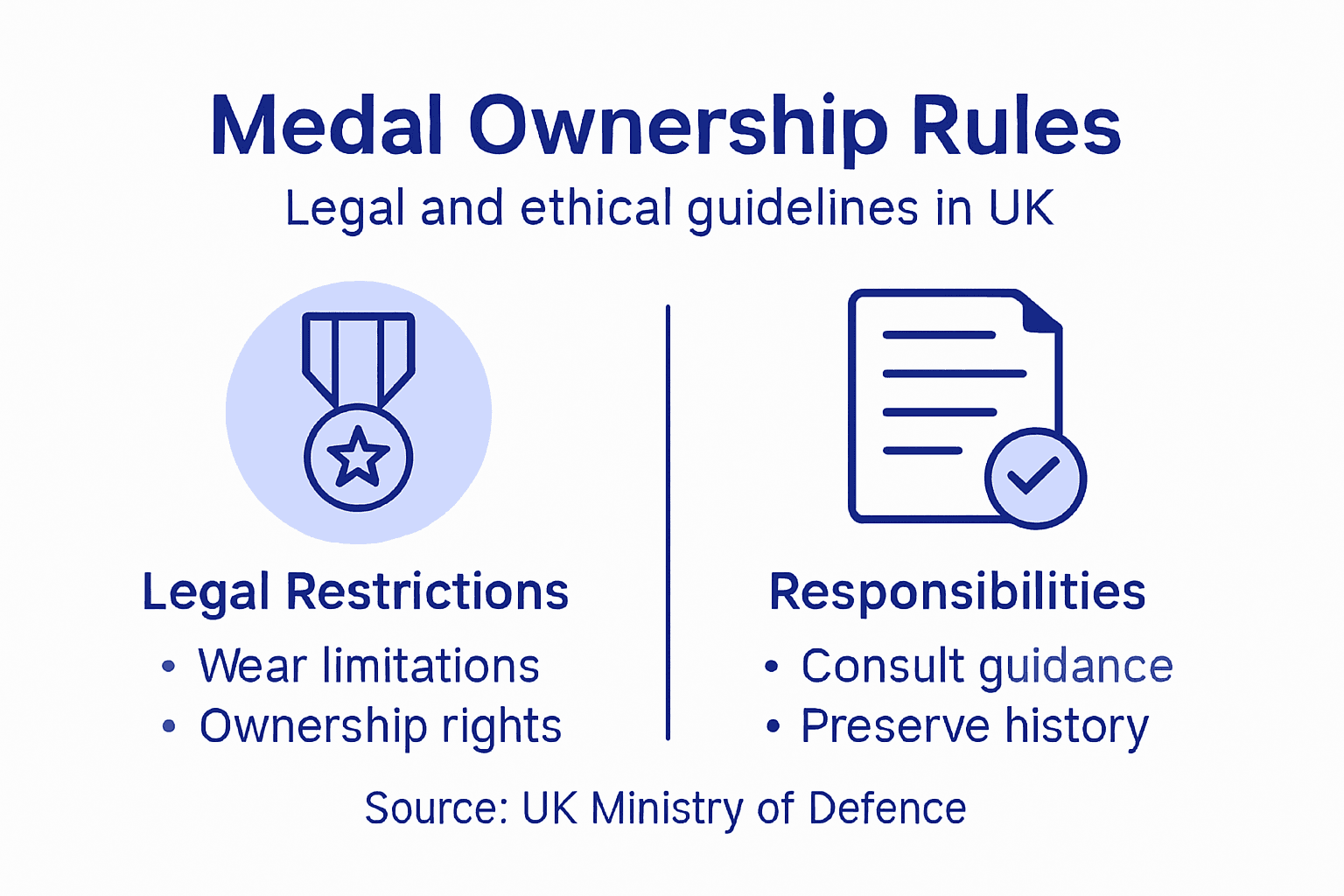
Pro tip: Always consult official military guidance before wearing or displaying commemorative medals to ensure you are following correct protocols and legal requirements.
Honour the Stories Behind Every Medal with Quality Military Gifts
Commemorative medals capture profound moments of service, sacrifice and national pride — yet preserving their legacy requires more than admiration. Whether you seek to celebrate a loved one’s gallantry or mark regimental achievements, finding meaningful presentation products can be challenging. The intricate symbolism and historical weight behind each medal demand gifts that reflect that respect.
At Regimental Store we understand the importance of honouring these tangible records of courage. Explore our range of UK military gifts designed specifically for members of the British Army, Royal Navy and RAF. Elevate your recognition with items that mirror the dignity and tradition commemorative medals represent.
Discover bespoke presentation solutions and keepsakes that truly embody the spirit of service and heritage. Start your journey today to celebrate military pride with authenticity and care by visiting Regimental Store. Take the next step now and find the perfect tribute to those who have served.
Frequently Asked Questions
What are commemorative medals?
Commemorative medals are tangible historical artefacts that represent military service and sacrifice, serving as records of significant campaigns, battles, and achievements within military heritage.
How are commemorative medals awarded in the UK?
Commemorative medals are awarded based on official eligibility criteria defined by the Ministry of Defence, with considerations including event-based criteria, service records, and specific roles in military operations.
What types of commemorative medals exist in the UK?
Key types of UK commemorative medals include campaign medals, coronation medals, service medals, gallantry medals, regimental medals, and temperance medals, each with unique historical significance and symbolic meaning.
What are the legal restrictions on wearing commemorative medals?
Legal restrictions include wearing only officially sanctioned medals, following specific guidelines for military and civilian settings, and ensuring that the medals are authentic and not misrepresented.
Recommended
- Complete Guide to the Meaning of Veteran Memorabilia – The Regimental Store Ltd
- How to Display Military Medals with Pride at Home – The Regimental Store Ltd
- How to Assemble Medal Display for UK Forces Recognition – The Regimental Store Ltd
- 7 Essential Types of UK Regimental Memorabilia Explained – The Regimental Store Ltd
- UK Defence Exports Hit Record £20bn In 2025 / Naijatipsland